Today I heard a Lewin's Honeyeater calling excitedly outside. I went out to see if I could record it. (I have a little Digital Sound Recorder - a new "toy" - which I am still learning to use.)
By the time I got out on the back deck, the Honeyeater had ceased calling and it was eerily silent outside. The only noise was a dripping sound, coming off the roof, because there was a really thick fog around all day. Our fogs often produce "run-off" from the gutters.
Anyway, I sensed that there was something odd about the "silence". So I peered through the fog and saw this. You can see from the trees how grey it was, and what poor visibility I was dealing with. These images are all greyed out, because of the fog, but the closer images (below this one) are all sufficiently detailed to make them worth-while clicking on to bring up the full-sized images).
 It was not much more than an "outline" to my poor old eyes. But from the "upright stance" I knew straight away what it was - a Grey Goshawk (Accipiter novaehollandiae***). This species is a resident bird, but seldom seen, because of its secretive manner of "stalking" birds and insects (and small mammals).
These birds are stealth hunters, and very secretive, normally. It is much more common for them to perch, hidden in trees, then to burst from cover, to give chase to birds. They hardly ever show themselves like this. But of course, it was camouflaged by the grey fog. And the resident Magpies were not on patrol. They didn't see it, or they would have hounded this wonderful bird out of the area straight away.
I ducked back inside the house, then rushed to get the camera, click off the Macro lens from last-night's moth shots, and click on the 70-300mm lens. I did a couple of practice shots to test my "light settings", before going back out onto the back deck. The reason I was so wary was that these birds have fantastic vision - probably 20 times better than mine, and they are usually very wary of cameras. Not this one, not today.
 Having got that first image, I relaxed a little, and settled down, half-hidden behind a branch of a Wattle Tree, close to the deck. The Goshawk gave me a direct stare - straight back down the lens. But it held its nerve. It did not flinch.
To see the delicate patterned feathers around the top of the chest and neck,
click to enlarge.
 Note the strong legs, clearly yellow. Also the yellow base of the beak, and the black curved tip (the black tip is clearly visible in the image 2 above). This is a big, powerful bird of prey. And it was serious about what it was doing. It was hungry. It was hunting, from a perch on the wire. Sitting on the powerline, but listening and moving its head around constantly - looking, listening and looking more.
Here it had turned its head right around. But it did not move its lower body position once.
 Note the immensely powerful feet - yellow legs, yellow feet, and powerful black claws.
This is the "Figure of Death" - staring down from the wires.
Now you know why the Lewin's Honeyeater had stopped calling.
See below, how it has lifted its pose, head held high, looking down to its left.
Now you know why the Lewin's Honeyeater had stopped calling.
See below, how it has lifted its pose, head held high, looking down to its left.
 And again it looked over to the left, behind it's left shoulder.
The bird kept looking around, listening, raising its head, bobbing its head (it does that to simulate a 3D sensation - to help get a better sense of what it is looking at). Although the bird did not move its position for 16 minutes (which is an extremely long time to have the opportunity to observe this type of bird), it never ceased "hunting".
Then suddenly it had gone.
Silently.
How did it do that?
Had I blinked? I must have done.
Silently.
How did it do that?
Had I blinked? I must have done.
Aaah, there it is - right down low, on an old triple fence post, at waist height. Amazing.
Please forgive the very grainy image. it was taken at about 80 metres distance, into a thick fog.
But I have posted it to show this rare event. The Sassafras trees in the background were shading the bird, which made it even more difficult to photograph in the heavy fog. It was only 2:40pm - but it seems like twilight conditions.
Note how powerful this bird is. Look at those massive shoulders.
It was still checking me out, over its shoulders, even from that distance.
It was still checking me out, over its shoulders, even from that distance.

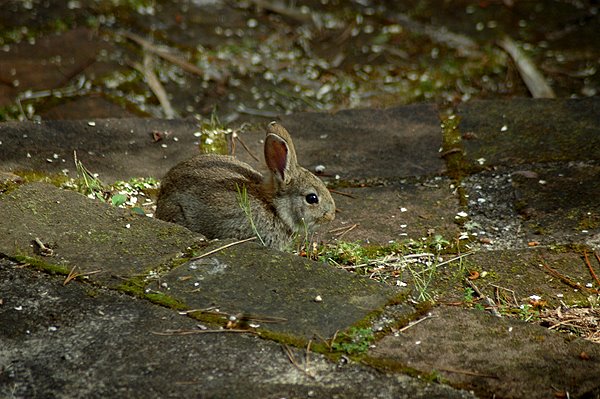
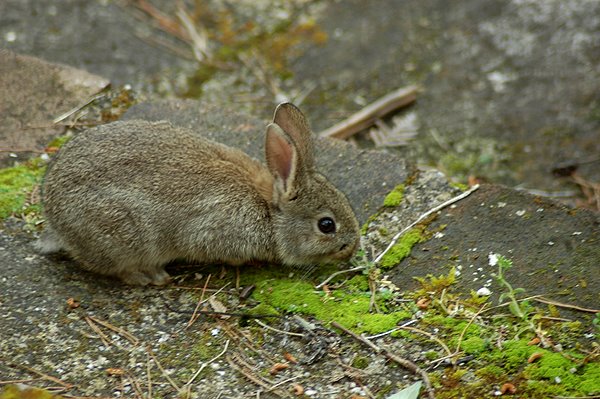
For this bird to fly down so low, and to pose on the fence like this is most unusual. Clearly it was "after something" - possibly some of the Rabbit kittens which live down in the bottom paddock.
*** I was intrigued as to why this bird earned the name Accipiter novaehollandiae. That to me indicated it was the first species of this genus described from Australia (the genus is global). Sure enough, it was described by Gmelin (a German naturalist) in 1788. As the first fleet arrived in that year (and seemingly none of the ships returned to England before 1789) it was almost certainly described from a speciment collected by Banks or one of his associates, from Cook's voyage from 1770.