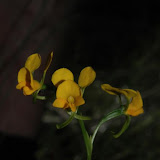
Christmas Bells

Christmas Bells
Christmas Bells - Blandfordia nobilis
Showing posts with label Mt_Rae. Show all posts

Tuesday, May 13, 2014

Gang-gang from Mt Rae flies to Canberra

 Mark Selmes from Mt Rae Forest is also known as Cranky Koala, and in this disguise, the cranky Gang-gang Cockatoo. Why is he always cranky? Because his forest home is constantly being threatened by firewood logging, under the guise of Private Native Forestry.


Regular readers will be aware of the many faces of Mark Selmes, otherwise known as Cranky Koala, famous Hunger Striker of Macquarie Street. Sydney, and resident of Mt Rae Forest; These people are also the scourge of firewood loggers, and more recently, supporters of the Laird State Forest opponents of Maules Creek Coal Miner, Whitehaven Coal. Recently he joined the Whoop-whoop riders from the Liverpool Plains

Mark Selmes joined the
Whoop-Whoop ride as it went past
Crookwell, NSW.


Mark lives in Mt Rae Forest, north from Goulburn and west from Taralga. 

I have written about Mark's patch of bush before, mostly because his block

is home to the rare and endangered Diuris equalis Orchid.

Diuris aequalis at Mt Rae.

Regular readers will know that Tim TheYowieMan, a  correspondent from the Canberra Times, is a keen supporter of natural wildlife and on occasions, natural eccentrics. He has written about me (and the Stinkhorn Fungi)  and now Mark Selmes.
http://www.canberratimes.com.au/travel/blogs/yowie-man/tim-the-yowie-man-ganggang-secrets-20140509-3809l.html

Wednesday, February 13, 2013

GANG-GANG COCKATOOS PLACED AT RISK BY NSW ENVIRONMENT MINISTER


GANG-GANG COCKATOOS PLACED AT RISK BY NSW ENVIRONMENT MINISTER:  Threatened Species ignored under Forestry Act for Private Lands
Conservationists have waited five and a half years to see the final Code of Practice (COP) for forestry operations on private lands.  What has it revealed? 
The Gang-gang Cockatoo (Callocephalon fimbriatum) is NSW listed as Vulnerable under the Threatened Species Act, but doesn’t rate a mention on the forestry COP for threatened  species in Southern NSW.  
Painting of Gang-gang Cockatoos
by internationally renowned wildlife artist
Humphrey Price-Jones
donated by the artist to Landcare
“No protective prescription exists for this species. It is not the only species either completely overlooked or left with inadequate     protections under this flawed code.  “The omission of the Gang-gang demonstrates either incompetence within the Office of Environment and Heritage (OEH) or worse” says Mark Selmes, Vice President of the Goulburn Field Naturalist’s Society, and long time opponent of PNF firewood logging in Mount Rae Forest - a known breeding area for this species of cockatoo.
“NSW Environment Minister, Ms Robyn Parker, is aware of the many flaws within the Forestry Code but refuses to act. The interim forestry law was a classic example of policy making on the run, but after five and a half years you’d expect the final COP could list correctly the known threatened species of our southern forests and woodlands. Past attempts to cover up the many inadequacies within this act are now exposed.”
 “How many of the over 225,000 hectares of logging approvals already issued have been in threatened species habitat? How many for nothing better than commercial scale firewood? How can such approvals  achieve the objectives of the Code in ”maintaining non-wood values at or above target levels considered necessary by society to prevent environmental harm and provide environmental services for the common good”. If such a product came from overseas we’d ban it. In NSW it comes with the Environment Minister’s approval.”
“The OEH has been aware of these issues for years but refuses to act. Mount Rae Forest sits atop the Great Dividing Range between Taralga and Crookwell and is known to contain eleven threatened species and over 250 more common plants and animals. This area was previously targeted for protection by the OEH’s ecologists who opposed the same firewood logging operation stating it would “negatively impact on the forests and threatened species” of this area. Five properties underwent surveys by the Conservation Partners Unit of OEH recognising the high conservation values of this area. Two landholders entered legally covenanted Conservation Agreements with the NSW Government, one signed by Ms Parker. These approvals take about a year and require detailed surveys. Meanwhile approvals for firewood logging on adjoining lands take on average 28 days and require no environmental surveys.
When hypocritical “streamlined” approvals allow the director of a firewood business to deny the presence of existing threatened species and gain support by forestry networks who state they will use this legislation to access  over a million ha’s of native forests in the region to supply firewood markets in Sydney and Canberra, then you know the OEH has become just another politicised agency selling out to vested interests. These logging plans are automatically granted bio-certification by Ms Parker, so now the OEH apparently recognises firewood logging with heavy machinery as improving  and enhancing  biodiversity.  Well this IS the same Environment Minister who once said logging protects koalas.
The Gang-gang cockatoo is the faunal emblem of the ACT where it is not yet considered threatened.  Many Gang-gangs breed in remnants of forest and woodland in the Southern Highlands and Tablelands before wintering in the lower altitude of Canberra. The people of Canberra can console themselves with the thought that while less of these charismatic cockatoos will be coming down to Canberra this winter, more firewood and wood smoke will be. Burning threatened species homes to warm theirs?  All thanks to the NSW Environment Minister. 

**********************
Sources: 

·         PNF COP  for Southern NSW    http://www.environment.nsw.gov.au/resources/pnf/0840copsouth.pdf
              Appendix: listed species ecological prescriptions p.16
    
·         Budget Estimate 2012 – Supplementary QONs page 23 of 54. Questions from the Hon. C. Faehrmann MLC  specifically questions 69 -77 on Mount Rae Forest.

·         For more information on Mount Rae forest go to     http://mountraeforest.com/

·         For a detailed public submission on flaws in the PNF COP as exemplified by the Mount Rae Forest case see:
Native Vegetation Regulation Submission No. 306 Mr Mark Selmes.
·     The below are quotes from  forestry newsletters which support the use of the OEH Private Native Forest Act for commercial firewood logging :
          Southern Tablelands Farm Forestry Network Newsletter Autumn 2009:
Forests for Bio-Energy Markets and Resources for Firewood in South East Australia...Comments from  a STFFN Perspective :
“The Southern Tablelands has 1.2 million hectares of private native forest (PNF), which if managed properly, could yield an estimated 800,000 tonnes of firewood per annum.   However 95% of this PNF is unmanaged, and most PNF owners do not do not realise the potential of the resource...”
“STFFN has been assisting some landholders to obtain a PVP to allow for harvesting of their PNF. Despite all this, governments appear to be reluctant to accept that firewood can be a legitimate greenhouse gas friendly heating source. The ACT government has actively tried to stop wood heating... and some local governments have refused development consent for sustainable harvesting of PNF, despite the landholder having a legal and legitimate PVP .*
*  This refers to Mount Rae Forest. Upper Lachlan Shire Councillors had voted against this operation (largely on the advice of NSW Government scientists . The need for council consent for forestry operations has now  been removed under the new State Template LEP and commercial firewood logging is happening in Mount Rae Forest.

Southern Tablelands Farm Forestry Network Newsletter
“The Native forest types of the Southern Tablelands rarely produce reasonable quantities of sawlog grade trees. In fact most of the wood in our forests is firewood grade. Therefore commercial harvesting will require access to the firewood industry... the challenge lies in coordinating a private industry and ensuring consistent supply. “
      
 “Options for Growing Firewood.
1.       Managing existing stands of native timber: There is more than 1.5 million hectares of existing native forest     
occurring on private lands in the Southern Tablelands. Much of this area of land is accessible for small scale firewood harvesting operations. Under New State government legislative reforms landholders will be able to conduct commercial firewood operations...”

Monday, November 14, 2011

Mount Rae Flowers - Picasa Photo Album


You ought be able to click on the image below, and scroll through the Album.

Mount Rae Forest - Nov. 14, 2011

Tuesday, August 23, 2011

Mount Rae Greys

My friend Mark Selmes, from Mt Rae forest, between Crookwell and Taralga, NSW often sends me images he has taken of the Grey Kangaroos and/or Wallaroos with whom he shares life in the Mt Rae forest. Tonight I am sharing some of his latest images.

His latest message was: "Pics - wild eastern grey with joey - spending a bit of time out of pouch,but sticking close to Mum."
"La Pieta" (Mt Rae style)
Grey Kangaroo doe with joey
"Watching animals in the wild -especially at play- allows us to observe
qualities we all share
and helps us to realise that we have a common bond.
(even with the most maligned of species)."
Can I climb up, Mum?
Grey Kangaroo youngster feeling frisky.
"Without the world of nature in all its many forms 
we would all be poorer in spirit 
and eventually as natural ecosystems collapse so would our world."

Grey Kangaroo doe showing her pouch opening
"Hope you enjoy the pics, I know I enjoyed taking them."
Mark
Cute Joey - thinking up a prank to play on Mum.
My own comment is that Mark is (for his sins) now serving time on the Board of the Nature Conservation Council of NSW.

I have previously shared with you images of some of the lovely Orchids which Mark has found growing at the Mt Rae Forest, including the endangered Buttercup Doubletail Orchid, Diuris aequalis.

Having seen some of the wild creatures which live in the Mt Rae Forest, I am sure you will agree that their home ought be protected from native forest logging.

Sunday, November 14, 2010

Orchids of Robertson, Goulburn and Mt Rae

On Saturday morning Kirsten, (the Editor of our local ANOS Bulletin) and I were invited by Mark Selmes to go to Mt Rae, between Taralga and Crookwell. Before we left Robertson, I took the opportunity to show Kirsten a wonderful group of Orange-blossom Orchids (Sarcochilus falcatus).
A nice single clump.
You can see the thick, fleshy roots and dark green leaves.
These plants have particularly large flowers for this species.
These are growing amongst the dense mass of "Rock Felt Fern" (Pyrrosia rupestris) on mature or senescent Blackwood Wattle trees (Acacia melanoxylon).
There are more than a dozen plants on a single branch here.
The plants which grow along my own road in Robertson have all-but-finished flowering. However, these plants in today's post are growing on a slightly higher ridge, and are also growing in dense shade underneath the dense canopy of Wattle foliage. So, although they are just a few kilometres away from Robertson, these plants are a full two weeks later than the local plants.

On the way into Goulburn I decided to stop off on Governor's Hill, above Goulburn. I have seen some interesting Orchids there in previous years. But that was a little earlier in the season. But we decided to have a look. We found a few Diuris sulphurea, but these are common in the Southern Highlands.

Suddenly, Kirsten bobbed down and started going on about something which I could not yet see. I moved over to inspect what she had discovered and realised that we both knew straight away that they were one of the "rufa" type Greenhoods. Tiny, brownish red plants, growing out of a dry rocky depression (a drainage line) on a dry rocky hillside. Good work, Kirsten. Fortunately I had my copy of David Jones's book to check out exactly which species we were looking at.

I claimed some credit for this "find" because I had deliberately left my camera in the car, because I hate carting the camera bag around, and then not finding anything to photograph. I was being superstitious, and not wanting to "jinx" myself out of finding something interesting. So, after Kirsten's "find", I cheerfully went back down the hill to get the camera, even though it was on quite a steep slope.
Oligochaetochilus rufus formerly Pterostylis rufa
These plants were mostly only about four inches high
(less than 10 cm tall).
Several "tall" plants were as high as six inches tall (midgets).
A single flower (one of a set on the stem)
Note the Labellum standing forward.
It has a wide, flat "hinge"
on which it can snap shut when triggered
The front view of the Labellum showing the stiff hairs.
Here is the Botanical illustration from PlantNET
It shows those fine short hairs both at the top of the Labellum
and along either side of the Labellum.
Here is another view of two flowers.
Looking at the lower flower, you can clearly see
how far the labellum protrudes before it
changes angle, hanging nearly horizontal.
For once I remembered to change the lens
and get a habitat shot (for Mick).
The main plants are Calytrix tetragona.
I have seldom seen such a dense flowering of "wildflowers".
Goulburn has had a great season this year.
Normally you would not take a second look at this hillside.
We left Goulburn behind and drove north to Taralga
and then west to Mt Rae.
Shortly after we arrived, Mark's neighbour rang
and invited us to check out her Orchids.
This is one of the "Caladenias" now known as
Stegostyla cucullata.
A lovely purple-tipped labellum, hooded "Caladenia" flower.
Here you can see the front, side and rear of three
different flowers on a single stem.
Ignore the other flowers in the background.
This was one of the best displays of these Stegostyla flowers
which I have ever seen.
A truly great display - and this is just some of these plants.
And then we went over to Mark's place
to worship at the foot of the forest.
Well, more or less.

Diuris aequalis in situ, amongst Snow Grass, below a Eucalypt.
This is what it was all about.
We were there to see these wonderful, but endangered
Diuris aequalis the "Buttercup Doubletail (Orchid)".The "Buttercup" name ought be used only in the adjectival sense.
It is not a Buttercup, which is implied if that word is used last.
I refuse to use the silly "Doubletail Buttercup" name
which they use in the
NSW Threatened Species List.
Diuris aequalis is listed as "Vulnerable" on the EPBC Act,
on the basis that less than 200 specimens are known,
from a range of locations between Braidwood and
Kanangra-Boyd National Park, in the Blue Mountains.


It is listed as "Endangered" on the NSW Threatened Species list.
The population between Taralga and Crookwell is well documented, largely thanks to the work done by Mark, and my ANOS colleague Alan Stephenson.

Documentation of this rare plant is important.
By the time I got home that night, I was quite exhausted.
It had been a big day.

Friday, February 12, 2010

Commercial killing of Kangaroos

Every now and then something comes across my desk which is so remarkable that I feel the desire to publicise it - with the approval of the original author. In this case, the document came from my friend Mark of Mt Rae, near Taralga, NSW (north-east of Goulburn).

PLEASE LOOK AT THE ATTACHED photos and then think of the commercial killing of millions of kangaroos this year across Australia.
Mum is shot, and hopefully dies quickly. The joey, which may be growing in her pouch and is attached to a teat (not visible in these photos) may be bashed to death or decapitated. (This is an act I have had to perform many times, when checking roadkill female macropod pouches and finding tiny, non viable joeys. Such an act is done as an act of kindness to end suffering, not as a brutal by-product of a commercial industry seeking mums skin for leather, her flesh for pet food, and apparently now as an environmentally friendly boutique food for people who would turn up their nose at the thought of eating wild rabbit).

But what of her 'young at foot' which is with mum in these photos?
DJW Edit: There was some confusion in my mind, as to whether these were
Grey Kangaroos or Wallaroos.
It has been confirmed now that they Are Grey Kangaroos, not Wallaroos.
But the same facts of biology apply to them as to the Grey Kangaroo.
Thankfully, both of these species are protected in the wildlife refuge
in the Mt Rae Forest.

The industry makes no mention of these. They are now too large for the pouch and no longer classified as joeys. Yet this little one still feeds from Mum?
I love the look of "resignation" on the face of Mum.
Unlike other mammals, Macropods do not just pass on essential antibodies in the first few feeds, but throughout the entire feeding and weaning process. A fully functioning immune system is essential to these highly strung animals, which can die easily of stress induced myopathy***. The young roo in this photo is bonded to his mum. He is dependent on her, not just for milk until weaned, but to lead him away from predators, teach him the 'wallaby trails' and introduce him to his environment.
I love the way Mum is resting on the Joey's back.
How many millions of these young at foot have died in the past decade we will never know. They are not large enough to be killed commercially (for skin or meat) and hop away into the night. Will they die quickly of stress myopathy***, or be killed by foxes or suffer a slow death by malnutrition?

The belief of shooters that these immature Kangaroos will survive
to be next years harvest are not based on fact.

Why is it that a value is only put on animal species when they are in danger of disappearing? Why does our appreciation rise, only as a species numbers disappear?

2010 is the International Year of Biodiversity.
Biodiversity means ALL living things.
We are human but certainly not humane. Otherwise we would use our science to find solutions that do not involve such barbaric practices. It would seem the only solutions we have where animals are concerned is the final solution. I suspect that we will not stop until all that is left to destroy is ourselves.

MARK OF MOUNT RAE

*** Myopathy - this condition causes the build up of lactic acids that can cause muscle degeneration, paralysis and death.

Red and grey kangaroos practice embryonic diapause and are known to stop reproduction during extended drought conditions.
It is also believed by some that they can determine the sex of the offspring.

***** ***** ***** ***** *****

NO ARMY CAN DEFEAT AN IDEA WHOSE TIME HAS COME.
(Victor Hugo)

***** ***** ***** ***** *****

Wednesday, January 20, 2010

Red-necked Wallabies of Mt Rae (near Taralga)

My friend Mark Selmes at Mt Rae regularly sends me wildlife photos taken at his property. This week he has excelled himself with photos of his young male Red-necked Wallabies (Macropus rufogriseus) testing themselves against eachother - (as young male mammals are prone to do).

Then there is a wonderful portrait of the "Old Buck" Red-necked Wallaby, watching and observing the young pretenders to his throne. At this stage, he has no problems, for they are fighting eachother - not him!

***** ****** *****

Mark wrote:
The ultimate winner is just watching the futile attempts of these three. He stands next to the female only yards from me, and defies all attempts from the younger three to get close.
His is the face of experience, a seasoned fighter.
The female is not happy - she often hides in my (now overgrown ) garden with her "little one" at foot, to seek protection and some interesting plants
to eat.

But this morning the males are emboldened and seem to have no fear of me anymore. She runs for the bush, her little one disappearing into the garden shrubs, sitting silent as he has been trained to do.

In the bush the fur is flying as Red-necks run in all directions.
(Click to enlarge - that is loose fur catching the light, not flies.)
Although this is nature and she is not a raised wallaby I've had enough and
chase after them. If she WAS one of MY girls she would not be treated like this! (DJW Note: Mark was once a volunteer for WIRES - hence the demonstrated sense of "bonding".)

Mark continues:
I find her hiding in the front of a wombat burrow.
The bigger and older male is fighting the others.
Fight scene AFight scene B
When I run in, they all flee, but the bigger one seems to forget himself and tries to push past me to get at the female, who is crouching in fear.
I let out a yell , and ALL the males flee.

The female comes out and sits silently next to me for 5 mins. She then hops quickly to the garden where her young one immediately appears. They hide in the shrubs for the next hour. Then Mum rests and feeds her little boy. They lie down and stroke each other.Occasionally shapes move on the ridge line - the males are still circling. I
keep an eye on the female and her little one and she sometimes nibbles on
the flowers. Then she dashes for the bush, her little one flying after her.

Here is another photo of the first (young) male sneaking up and spying on the young Mum.
It was quite funny as they all seemed to look at her - I was standing right there - and it was as if i didn't exist.

Gee, talk about one tracked minds!

MARK

DJW Comment.

You can see how Mark loves his animals.

To the "Purists" out there, I say don't worry about Mark's attempted interference in the mating rituals of the Wallabies - Mark is not out in the Mt Rae Forest 24/7 (as the jargon is).

No doubt the survival of the fittest is proceeding apace, despite Mark's protective instincts.

He is getting on with the real task confronting him, protecting the Mt Rae Forest from the local wood cutters who wish to clear the surrounding forests. See these previous posts: