Christmas Bells

Christmas Bells
Christmas Bells - Blandfordia nobilis
Showing posts with label Black_Cockatoos. Show all posts

Sunday, August 14, 2011

Ulladulla springs to life.

For many months, since reading Benj Whitworth's postings on the Canberra Ornithologists Group forum about the joys of discovering the plants and birds of Ulladulla, I have wanted to explore the Reserves there. 
My friend Kirsten, who grew up in that area, kindly showed me around several of the Reserves there, yesterday.

There are several excellent Reserves at Ulladulla (on the coast 45 minutes driving time, south from Nowra).
Having done a considerable circuit at the Wildflower Reserve, we adjourned (via the excellent Hayden's Pies) to the South Pacific Heathland Reserve, This is just along Dowling Street, behind the Ex-Servicemen's Club which is on the Pacific Highway, on the southern end of Ulladulla. (see linked map for both Reserve locations)

The first place we visited is known as the Wildflower Reserve. At first it seemed to be a fairly uninviting patch of coastal forest. Kirsten will kill me for that comment. But there were many interesting plants there, especially leaves of Acianthus, Corybas and the related Nemacianthus - all tiny Ground Orchids -   (upon close examination of the forest floor). 
We saw lots of birds, most especially a mixed feeding flock of Silvereyes, Brown Thornbills and Wrens, with Pardalotes and Yellow-faced Honeyeaters in the canopy above, in the Wildflower Reserve.

Kirsten photographing a very thin-leaved Acacia.
It is possibly Acacia elongata (but I am no Acacia expert)
Acacia elongata (possibly)
Click to see the ribbed stems and 3 flowers coming from each leaf axil.
That species (A. elongata) looks right to me.
Compare this image from the Bega Valley area.

Sprays of Comesperma volubile were draped over many shrubs

 This was an unexpected bonus.
Waxlip Orchid - Glossodia major
Glossodia major just opening up.
Believe it or not, this was what I had been hoping to see.
Well, hopefully a fresh flower - but this dried flower is still identifiable
because of the long filamentous tips on the sepals.
It is the Mayfly Orchid, Nemacianthus caudatus
Long filamentous tips on the sepals of Nemacianthius caudatus are still evident.
One of the identifying features, apart from the long sepals,
is the brilliant red underleaf.
Underleaf of Nemacianthus caudatus

But there were hundreds of birds in the South Pacific Heathland Reserve too.
Yellow-tailed Black Cockatoos.
They love the Casuarinas and Banksias in the Heathland Reserve .
Head of Black Cockatoo seen on top of low Casuarina bushes
New Holland Honeyeaters (3) in Casuarina above Grevillea bush.
And now to some of the more obvious flowers
from the wonderful South Pacific Heathland Reserve.

These Correa reflexa plants were prominent in this Reserve.
The flowers were very fat (I think so anyway).

This is the very pretty (but small) flower of Eucalyptus sieberi
It is known as the Silver-top Ash.

Pimelea linifolia
A young flower head of the NSW Waratah (Telopea speciosissima)
Telopea speciosissima
 The sweet honey-smell of the Wedding Bush 
was almost overwhelming in places where these plants were growing.
Ricinocarpos pinifolius
Further to our finding the large Waxlip Orchid in the first reserve
in a moss bed in the Heathland Reserve we found a colony of
the Small Waxlip Orchid Glossodia minor 
Click on the image to see the diagnostic dark double "calli"
on the labellum.

Here is a loose colony
on a moss bed.
If you expand the image (click)
you will see the flat hairy leaves of these plants.
Glossodia minor in a moss bed
Here is a local favourite at Ulladulla - the rare Grevillea macleayana
It was previously known as Grevillea barklyana subsp. macleayana
It is referred to by PlantNET as the Jervis Bay Grevillea.
It has the classic "Toothbrush Grevillea" flower structure.
 
Grevillea macleayana
Probably my favourite image of Grevillea macleayana. 
It shows why it is so popular with the local Honeyeaters and Wattlebirds.
There is a lrge bead of nectar which has leaked out from the flower.
It shows how rich these plants are in nectar.
A bead of nectar visible in the flower of Grevillea macleayana

Here is one of the surprises of our trip
Lyperanthus suaveolens  - the so-called "Brown Beaks" Orchid.
Close-up of Lyperanthus suaveolens
Full stem of Lyperanthus suaveolens
Pigeonhouse Mountain
Whenever I glimpse this mountain (always in the distance)
I am reminded that it was named by Captain James Cook in 1770.
A symbol of our earliest European conquest (and place naming).
My good friend James, believe it ought be called Nipple Mountain.

I wrote that before I checked for the Aboriginal name.
"Didhol or Dithol" which means 
Woman's Breast on account
of the distinctive shape of the mountain. 
(according to Wikipedia)
Pigeonhouse Mountain in the distant hinterland behind Ulladulla.

Wednesday, January 19, 2011

Black Cockies take time out at my place.

Yellow-tailed Black Cockatoos (Calyptorhynchus funereus) are a regular bird around Robertson. Scarcely a day goes by when I do not hear them, or see them (except in mid-spring when they are nesting in the huge Gum Trees which they need for their nests). At that time, they are down in the tall Eucalypt forests around Belmore Falls - just 5 kilometres away. But I do not see them for that period.

As soon as they youngsters are able to fly, the parents bring them back up the hill to Robertson where there is abundant food for them. The fact that they love Pine Trees, and seedling pine trees become 20 metre high weeds is another story.
Today the Black Cockatoos came into my yard.


By saying they came into my yard I mean they came right in amongst my Blackwood trees, instead of just flying over - from one Pine Tree to another.

These birds always seem to me as if they are born (hatched - but that's not the right expression) - "born with a spanner in their face". They chew on things because they can. In fact they seem compelled to chew on things.

Click on this image to see the enormous beak in action.
Black Cockatoo chewing on dead wood of tree (click to enlarge)


Two Black Cockies flying over
A family of these birds can make an awful racket. I have come to like their weird howling call (listen here) - as it is so preposterous, so incongruous. But when the young birds are around they make a combination of seemingly incessant low croaking or moaning calls. But when they are begging for food, or being fed by regurgitation, by the adults, they make a fast repetitive noise (eh,eh,eh,eh,eh).

It is a noise only a parent Black Cockatoo can love.


 At last a half-way decent overhead shot.
Fortunately, Zoe was with me, and called out 
that they were flying over my head.
Click to enlarge this image.


Male Black Cockatoo - with red skin around the eye (click to enlarge).
The red eye is a surprise (that one can see it so clearly). It indicates a male bird.

Tuesday, March 09, 2010

Swifts zoom past Robertson

I know, I know, I know - Spine-tailed Swifts (as I grew up calling them) are now officially called "White-throated Needletails" (Hirundapus caudacutus). But that is a terribly clunky name, for which we owe a debt of gratitude to the "taxonomists" who set the international rules of nomenclature for all living creatures - birds, animals, plants, fungi and all the other creatures which swarm on the face of the earth, and especially within its bowels.

In this case, the rules are simple, we fit in with the names used in other countries where our birds are also found. If they had a name for a bird we subsequently found and named here, then that first name rules. That's roughly how it works, anyway.

Our explorers were a slack lot, and didn't "find" Australia until 1770 (well, officially, any way), and by then Asia was well and truly on the way to being exploited by Europeans. So in the world of taxonomy, their (European) names win out. Not the names the Japanese or the Indonesians use (of course) that would be too simple by half. No, I mean the names which the German, Dutch, French and English scientists gave to these Asian birds, back home in their dusty museums.

Hence "White-throated Needletail". You can see this particular feature of this bird, in a rare image of a dead specimen of this species, which happened to be found dead in Canberra. But, looking at that photo, you have to ask - who else but a Museum worker would suggest this obscure and nearly invisible feature of a bird be used to signify the generic name of this remarkable, fast-flying bird?
***** ***** *****

Why am I writing about Needletails? Well today I managed to take a few snaps of several birds as they flew fast and low past my place, this afternoon. This is the first occasion I have managed any sort of photograph of White-throated Needletails.

Only once before have I ever photographed Swifts, and those were the even rarer Forked-tailed Swifts. But they were very co-operative, and a large flock circled around my house for about 15 minutes, and then disappeared. A first and only visit.

I had seen several Needletails two weeks previously, but I did not manage a photo on that occasion. This is only the second sighting of this species for me, this summer.

"Swift" sightings are always exhilarating, as the birds fly so fast, and zoom past you in such haste that you have to swerve your head to follow their movements.
And it is all the more remarkable when you realise that they are not just flying, they are feeding on the wing - catching insects as they go.
How remarkable must their eyesight be - to see an insect, when travelling in excess of 100 Km/hr., and then steer towards that insect, open one's beak and catch that flying insect?Every now and then one gets lucky enough to say - that shot is as good as I can hope to get tonight - with this light, and this lens. Thank you and good night!
And as my Brother Brendan has just pointed out to me, this photo is worth showing - if only for contrast in wing shape and performance. As we were sitting on the back deck, watching the Needletails zip past, a small flock of Black Cockatoos flew past. Here they are.

Check out the remarkably different wing shapes and wing flap styles and of course, the very long tails on the Cockies.
Those wing shapes and the tails, contrast against those of the Needletails whose tails have been reduced to mere stumps with fine needles in them (which they apparently use for perching on rocky cliff faces) - when nesting in Korea and Mongolia.

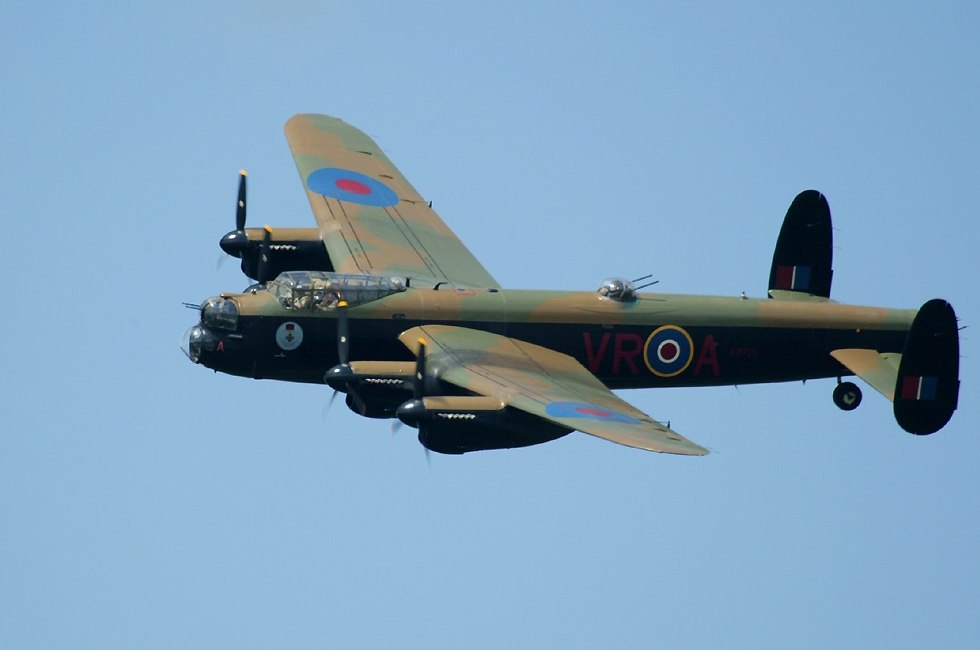
In aeroplane parlance, the Needletails are obviously the F-111 (with adjustable wing angles) and the Cockies are World War 2 Lancaster Bombers. Both can fly - but they do so in a very different manner.

Saturday, November 21, 2009

Black Cocky - close enough to get a photo

Yellow-tailed Black Cockatoos (Calyptorhynchus funereus) are commonly seen around Robertson, but usually they are high in the tops of old Pine Trees (Pinus radiata) and are either in the heavy shade, or silhouetted against the sky. Either way, they are not worth trying to photograph.

Several days ago I heard a young bird making its incessant creaking and groaning sounds, from relatively low down in a Eucalypt tree.

I stopped to take a photo (from out the car window).

Once I had got my shot, three birds flew away. I had only seen the one on the open branch, but clearly the other two were in dense cover of a low-growing Blackwood Wattle.
Female Black Cocky has a white beak
and dark skin around the eye (not a red eye ring)
My bird is an adult female, and so I assume the others included at least one juvenile bird, for their noise is diagnostic.

EDIT:
Dear reader - Please do yourself a favour and read the Sequel to this post, on my Colleague "Mosura's" Blog - The Nature of Tasmania.

Frankly it is a hilarious "comedy of errors" - but Mosura recognises the folly of his impromptu response to grab a few photos - in retrospect.

It is nice that I inspired him to try to photograph some Black Cockies of his own. He ends up giving us some stunning Insect photos, though.

Hope the Ant Bite has stopped throbbing, Mosura!

Cheers
Denis

Thursday, September 10, 2009

Black Cockie playing around

Several days ago, a mob of Yellow-tailed Black Cockatoos (Calyptorhynchus funereus) came past my house, and squealed and squawked and carried on for ages, in the local Pine Trees.

Once again, these are not good photos, for these birds love to land in the very tops of Pine Trees (Pinus radiata), their favourite (introduced) food trees. That means that although one can see them clearly, and hear them very clearly indeed, with their amazing noises, they are in fact pretty much at the limit of my camera lens.

Still, I cannot resist publishing these images.
Three Black Cockies on Pine Tree
A weird but interesting shot of a Cockie flying low over my head.
These birds flap very slowly, but they are so powerful that they fly at about 30 Kms per hour with no trouble at all.
So, they can travel 100 metres in a few seconds, in about 3 wing flaps.
That makes them deceptively hard to capture in flight.

This shot shows the yellow panels in the tail.
This shot shows the slight crest on the head,
and the yellow patches on the side of the head.
This bird has launched itself from the highest branch on the tree, and is falling/flying out of the tree.
As usual such behaviour is accompanied by the tell-tale screaming call.
You may listen to the call (in MP3 format) from this site.

Monday, June 23, 2008

Robertson Nature Reserve - pine trees removed

At the entrance to the Robertson Nature Reserve there is a stand of about 10 huge old Pine Trees (Pinus radiata). They dominate the north side of the Reserve. As you can see, they tower over my little car, and the other native trees near the roadside edge of the Nature Reserve. One of these trees split and dropped a huge branch across South Street on 2 November 2007. I reported on this at the time.

Now the National Parks and Wildlife Service which manages the Nature Reserve has contracted for the removal of some of these trees, and the pruning of the limbs of some other trees which have been assessed as a safety risk. This work has commenced today, and is scheduled to last all week. Judging by the size of these trees, I am not surprised.

They are operating with an operator working from a "cherry picker", and with a 20 tonne crane, which is being used to lift and swing down to safety the large branches, as they are cut. This is a good process, which will minimise risk to workers, passers by and also to the rest of the vegetation in the Nature Reserve. Naturally the road (South Street) is subject to periodic closures, and "tidal flows" (Stop/Go signs controlled by workers) at times when half of the road (only) is open.
This work will result in some reduction in the Pine Cone feed supply for the resident Black Cockatoos, but as an environmentalist, i would have to declare that a good thing. We all know the Black Cockies love to chew the Pine cones, but in so doing they spread the seeds. Robertson does not need any more Pine Trees (25 metre high weeds) being spread about by the Black Cockies.

The NPWS Press Statement is as follows:

Robertson Nature Reserve Pine Trees
The National Parks and Wildlife Service has recently had a safety assessment done on the large introduced pine trees in Robertson Nature Reserve. A number of these pines were found to be in a state of significant decay and they may pose a safety risk for the public.

The Service also commissioned a heritage assessment of the introduced pines that included historical research and interviews with a number of Robertson residents with knowledge of the trees.

As a result of the recommendations of these assessments, the Service intends to remove some trees and prune the limbs of others that have been assessed as a safety risk.

A separate environmental assessment found that there would be no negative impacts on native species of flora or fauna in the Nature Reserve by removing the pine trees. There was some concern that the pines may have had a population of tree orchids growing on them, but it was found that these are actually a type of small fern that is common in the Nature Reserve. After the pines are removed, the site will be monitored for new weed growth due to increased light reaching the forest floor after the removal of the trees.

If possible, a disc of timber cut out of the trunk of one of the trees will be presented to the Robertson Museum.

The Reserve will be closed to visitors from Monday 23/06/08 to Friday 28/06/08.

If you require any further information please call the NPWS Highlands Area Office on 48878244.

End of NPWS Press Release.

Thursday, January 31, 2008

Storm which hit Sydney started at Macquarie Pass.

I watched an amazing storm developing this afternoon. I drove out to the edge of Robertson, overlooking Macquarie Pass, to get a good look at it, before it really burst. Here is a link to the views from this same position, early in the evening, and at dawn. The views are amazingly different from tonight's storm.

Mt Macquarie, overlooking the Macquarie Pass, looks very imposing with a tiny patch of sunlight showing up the forest just underneath the cliff face. The white cloud was being whipped up and over the escarpment face. There were strong lightning bursts, every 3 or 4 minutes.
On the way back into Robbo, I listened to reports of water over the Princes Highway at Albion Park, then heavy downpours at Bellambi (northern Wollongong), and then it moved north, towards Sydney, 100 kilometres away. It took a little over an hour to get there.

This image shows a wall of water being dumped out of this thunderhead, over Albion Park and Dapto, just south of Wollongong. This was the peak intensity of the storm, from what I could see.
According to the Weather Bureau's website, tonight, Huntley Colliery (the other side of that bluff, at Mt Macquarie) reported 35 mm tonight, and Bellambi scored 46 mm of rain. Both from this single storm. Tonight the news reports are carrying stories of 100 Km per hour winds at Holdsworthy (southern edge of Sydney) and then it went to Blacktown, where people are still waiting to have their roofs repaired after the last big storm, in early December.

This is a panoramic image. Click to enlarge it, to see the "full picture" of this storm - it spans from Albion Park (under the clouds, far right) back to Mt Murray at the very far left of the picture. Wollongong is under the storm, in the middle of this image.
And this is what the local birds thought of it all. Yellow-tailed Black Cockatoos (Calyptorhynchus funereus) flew up out of the forests below the escarpment, heading north and west, away from the storm. Like the "Harpies" from a Greek tragedy, these birds were giving their full, drawn-out wailing cry. Very atmospheric.No sooner has these 3 birds flown past than a full flock (of 27 birds) flew up out from the valley below, also putting a lot of distance between themselves and the storm.

If you have ever seen these birds, you can possibly image how loud and ominous their combined 27 calls were. You can listen to the call by clicking here! Thanks to the "Birds in Backyards" website - from the Australian Museum (Sydney). The main site to the BiBY Bird Finder is permanently linked from the side bar of my blog.A very impressive ending to a very impressive storm.

POST-SCRIPT: The Illawarra Mercury has reported that the storm which I have witnessed here was caused by 3 separate storm cells merging.
  • A merger of three storm cells south-west of Wollongong led to the extreme weather conditions across the Illawarra on Thursday afternoon.
  • Bureau of Meteorology forecaster Chris Webb said that at 3pm on Thursday separate storm cells were recorded north of Nowra, south-west of Robertson and over Kiama.
  • About 4pm the three cells came together around the Dapto area, resulting in strong winds, heavy rain and hail as the storm made its way north.
So there it is. You now know why this particular storm was so powerful. You can read the full report here.

Monday, May 28, 2007

Two other observers in the bush, today.

Young Grey Kangaroo
Normally, in the wet forests of this area, the Macropods one sees or hears going "Thump, Thump", are Swamp Wallabies.

Today, however, I found two Grey Kangaroos (Macropus gigantea). I was driving very slowly into a grassy area (beside an old quarry), to look for Greenhoods (which I did not find). But I did surprise these very puzzled Grey Kangaroos.

Not many people drive in here, obviously, and so they allowed me to drive within about 80 metres. Once I had taken a few photos, they gently retreated - without the thump sounds, as the grass is so long there.


With grass in mouth
I love the way this little Roo was not troubled by my presence, and kept chewing on the long, rich grass, while I was photographing her (?).


Greenhood - opening
Previously I had found a rosette-type Greenhood just about to flower. I have no idea (yet) what species it will turn out to be.

I also found literally hundreds more Ground Orchid plants, just at the leaf stage. Anyway, it looks like this season, with the heavy rain in February, is allowing the Ground Orchids to form great growth, which hopefully will lead to a good flowering season over the next spring, and summer months.

Long-leafed Greenhood
Bunochilus longifolius (formerly Pterostylis longifolia) shows its distinctive long leaves. The leaves look almost grass-like, especially if the plant happens to have been knocked over, (which is quite common).
This one is still budding, while there were quite a number of the same species in flower down the coast last weekend. But that is not surprising, given the climate difference, from the extra altitude here.


Another surprise!
This Yellow-tailed Black Cockatoo (Calyptorhynchus funereus) was so busy chewing on a trunk of a young tree, to get a fat borer grub, that it allowed me to pull up in the car, quite close to her.
They listen for the sound of the grub chewing inside the trunk, and then chew away the wood, until they get the grub out.

Unfortunately the forest was quite dark, and so the shot is not very successful. But the activity is so very typical of these Cockatoos, that I have been hoping to get such a shot for a long time. So, for better or worse, I publish this photo.
I have previously posted photos of the damage which they inflict upon Kangaroo Apples (Solanum aviculare).