Christmas Bells

Christmas Bells
Christmas Bells - Blandfordia nobilis
Showing posts with label Wingecarribee_Reservoir. Show all posts

Tuesday, December 09, 2014

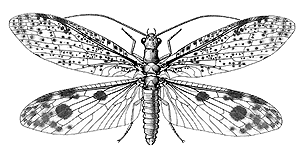
Dobsonfly - Archichauliodes species.

I always find Dobsonflies to be slightly strange insects.
They are as big as Dragonflies, but they fly with a weak, fluttering motion which immediately sets them apart from Dragonflies. They are partially aquatic. Eggs are laid on land (on rocks or vegetation). Then Larvae crawl to fresh water and become completely aquatic, until such time as they are ready to pupate.

From: http://www.ento.csiro.au/education/insects/megaloptera.html
Megaloptera: dobsonflies and alderflies
CharacteristicsThis is a very small order of Australian insects commonly known as alderflies and dobsonflies. They are medium to large sized insects with a wingspan ranging from 20 to 100 millimetres. Alderflies and dobsonflies can be recognised by the following features:
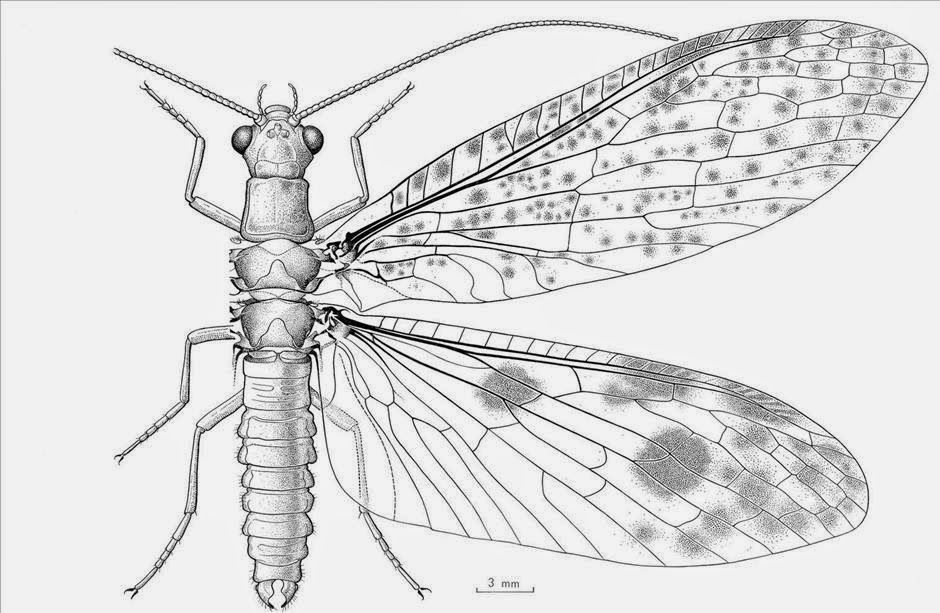
Archichauliodes species
Archichauliodes species (CORYDALIDAE)
  • Long, soft, flexible bodies, usually dark coloured
  • 2 pairs of membranous wings of similar size, often bearing dark patches.
  • At rest the wings are held roof-like over the body
  • Mandibulate mouthparts
  • Long filiform antennae which taper towards the end
CORYDALIDAE is a widespread family of dobsonflies and well represented in Australia.
Archichauliodes species are inhabitants of cold-water streams and can be found from southern Australia to north Queensland. Adults of this species can usually be recognised as they have 4 or 5 large spots on their hind wings in addition to many smaller spots towards the edges of the wing.
The larvae of alderflies and dobsonflies are aquatic, appear caterpillar-like and possess gills along the sides of their abdomens.
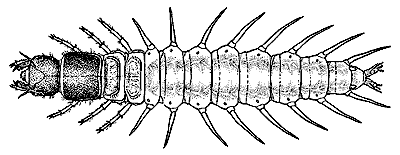
Archichauliodes species
Archichauliodes species (CORYDALIDAE)
DJW Notes:
They are not completely Aquatic in larval stage of their life-cycle (again, unlike Dragonflies).

Back to CSIRO site:


"All species have aquatic larvae and mating occurs on the vegetation close to freshwater streams. Female alderflies and dobsonflies may lay up to 3000 eggs on rocks or debris close to the stream but not in the water. When the larvae hatch they enter the water and live a permanently aquatic life until they are ready to pupate. At this stage the larvae move out of the water into the adjacent leaf litter or soil where they pupate for several weeks. The complete life cycle may take only one year in warmer areas or up to 5 in colder climates."

Here was my first ever photo of a Dobsonfly.
It took me ages to get a proper ID on it, because, apart from specialist Entomologist site, there is not much readily available on them. At first I thought this was a Stonefly, but it is not. Nor is it a Giant Lacewing (with which it might be confused).
Dobsonfly on Tea Tree.
Wingecarribee Swamp, Nov 2007
This was found on the edge of the Wingecarribee Swamp, in late November 2007. On a flowering Tea Tree (Leptospermum sp.) But that fits with its aquatic larval lifecycle. My insect, from yesterday, was also attracted to the flowers of relative of the Tea Tree (Astartea fascicularis).


Archichauliodes species (CORYDALIDAE)
  • Great photo of a Dobsonfly
    originally sourced from CSIRO "What Bug is That?"
    Unfortunately that site appears to be
    no longer being maintained.

    Thanks Mr Abbott.
    Dobsonfly on my front porch - attracted to the light
    4 December 2013
    Seems they like to fly at this time of year.
Here is another page from CSIRO, to show some of the differences between Dobsonflies and Ant Lions and Lacewings.
http://www.ento.csiro.au/education/insects/neuroptera.html


Since publication, I have been contacted and provided with a working link to the "What Bug Is That?" site.
It is 
http://anic.ento.csiro.au/insectfamilies/index.aspx
Thanks to the ever alert members of the scientific community.
You know who you are :)

Wednesday, May 13, 2009

Stonefly larvae in pools on the sandstone.

Here is a tiny pond creature I found in a pool of water beside a track, out on a sandstone plateau. It was only about 0,5cm long (5mm). It is equipped with a formidable set of jaws, and its other most noticeable feature is the prominent paired cerci (tail appendages). I knew enough to know that Mayflies have distinctive triple cerci. So what was this? Obviously not a Mayfly larva.

Here is one of these tiny creatures photographed from the underside.
Another image of the same specimen. Unfortunately, some pool debris is attached to the tail, confusing me as to its proper shape. Fortunately the dual tail antennae are clearly visible in the first shot.
"Stoneflies, order Plecoptera, are distinguished by two long thin tails projecting from the rear of the abdomen. The body is somewhat flattened, and there are two claws that extend from the three pairs of segmented legs. Stoneflies are considered crawlers and crawl around looking for food. They are not tolerant of water pollution."

After some time studying this pool, it was obvious that there are other far smaller creatures moving around in there, which I would need a laboratory magnifying lens or microscope to study. Stonefly larvae are classed as "crawlers" by people who study pond life.What surprises me about finding many 
of these tiny larvae
is that I have only once identified*** an adult Stonefly.
It was a moderately large flying insect (as large as an average Dragonfly). This one was found beside the Wingecarribee Swamp in November 2007. But here were lots of Stonefly larvae out on the sandstone plateau, but I have never seen adult Stoneflies there. A puzzle to me.

***
The "puzzle continues" On New years Eve, 2011 I found an insect which looks very similar to this one, (above).
With the aid of a friend's Mobile Phone/Camera we got enough "angles" on that insect to indicate it is a "Dobsonfly".
That ID casts doubt on the validity of the ID of this adult insect (above) as being a Stonefly..
The larvae are OK, though.
Check my Blog for January  2, 2012 for the other information.

Denis

Saturday, February 28, 2009

Water arrives in Lake Eyre - check your Pelicans.

Have you missed your local Pelicans yet? You may recall that I predicted two weeks ago that the Pelicans would arrive in Lake Eyre, with the flood-waters coming down from Queensland. I suggested that people, especially our Gippsland colleagues, ought observe their Pelicans, to see if they start to disappear. Well, today's press tells me that the waters have now arrived there - and so have the Pelicans.

(Photo: Weekend Australian 28.2.09)

Today, I was looking for Orchids on the side of Macquarie Pass, when I lay down to take a close-up shot of a little Ground Orchid. As I did so, I happened to glance skyward. From a gap between the branches of towering Eucalypts in a patch of wet schlerophyll forest, and rainforest understory, I briefly glimpsed a group of Pelicans flying overhead. A very unexpected sight, as I am sure you will understand - Pelicans flying over a rainforest.

These Pelicans were heading westwards. Now the most obvious explanation was that they were simply circling to gain height to cross over the towering sandstone cliffs of the Illawarra escarpment, in order to cross then glide down to the nearby Wingecarribee Reservoir. However, it is entirely possible that they were following an instinct which we know about, but barely begin to comprehend - to fly a vast distance to Lake Eyre, to breed while the famous dry salt Lake Eyre is in flood.How do the Pelicans of the east coast know when to fly west to Lake Eyre? Perhaps they had read the front page of the Weekend Australian today. "Waters give lift to nature's Eyre force" (pathetic pun, by the way, dearest Sub-Editor of the Australian).
  • "Most of the water that began coursing into Lake Eyre this week is from the Georgina River, which rises near Mount Isa in north Queensland and is in fierce flood. The Diamantina, further to the east, is not flowing as heavily; a third river draining to the lake, the Cooper, has not run into it since 1990."
  • "The birds are already in a feeding frenzy. Australian pelicans, silver gulls and gull-billed terns have flocked from up to 2000km away to dip into the teeming waters." (Source: "The Australian"28 February 2009 - story by Jamie Walker)
I don't know if Pelicans have a barometric sensor system, which tells them there has been a massive depression (Low Pressure System) in northern Queensland. Whatever it is, Pelicans are undoubtedly moving (from somewhere) to Lake Eyre, to feast on the burst of life which follows a flood there.

They feed, then they breed, as quickly as possible. They have to race against time, as the slow ones end up losing their chicks to starvation, if they are not fully fledged by the time the waters of Lake Eyre dry up again. It is a risky strategy, but then again, this is part of Australia's natural "boom and bust" or "flood and drought" cycle. It is all totally natural, and has been played out for millions of years.

Please let me know if you are suddenly not seeing Pelicans, where you would expect to see them.

Wednesday, October 08, 2008

A fly-by Sea Eagle, chased by Magpies.

Duncan, down at Ben Cruachan has a lovely story today about a nest of the White-breasted Sea Eagle, in Gippsland, Victoria. Lucky him.
I was outside this morning when the local Magpie gang started up their distinctive calls they make when there is an eagle about. I looked, and the leading Magpie was flying straight towards a large bird flying fast, just over the local horizon of Pine Trees.
The bird flew straight towards, and then past, the Magpie(s) - for two more had arrived by now.
I though for a moment that it might be a Pelican, for I saw one of them over the village a week ago. But very soon it flew directly over me, and I could make out its head and beak, its very deep wings, and relatively short tail.
It was an immature bird, on the turn, being half-white underneath, but with dark blotches under the wings. It was not the clear grey and white of an adult Sea Eagle.
Its wings were much deeper than a Little Eagle (which is a relatively common visitor). Nor did the wing shape match an Osprey (which has thinner wings, and distinctive notches at the joints in the wings).
I had barely time to make my mind up as to its identity than it had passed out of view. Unlike the Little Eagle, which visits me when a southerly is blowing, and it will circle and then hover on the breeze, allowing plenty of chances for photography - this bird was on a mission.
The local Maggies gave up the chase (successful - in their minds, no doubt). But I could hear the next tribe take up the challenge.
Where I am, the coast is 25 Km east, (below an escarpment some 700 metres high) and the Wingecarribee Reservoir is 5 Km west. This bird was making a direct line for the Reservoir. But it still had 2 more valleys to cross over, then a further high hill, before it would sight the water. But it was flying very strongly, (even into a head wind) and would have made its likely destination within a few minutes.

Friday, August 08, 2008

The Wingecarribee Swamp collapse - 10 years on.

Dr David Tranter spoke at REPS tonight, to remind us that it is 10 years since the collapse of the Wingecarribee Swamp.
Floating islands of dislodged peat and vegetation
in the Wingecarribee Reservoir

The swamp had been mined for peat since 1967. The lease had expired in 1992, but mining continued. The renewal of the lease was eventually reviewed by the Mining Warden Inquiry. the renewal was opposed by Sydney Water Corporation, the Environment Protection Authority, the National Parks and Wildlife Service (NSW), the then Department of Land and Water Conservation, the Royal Botanic Gardens (Sydney), the NSW Heritage Council, the Australian Heritage Commission, and the Wingecarribee Shire Council. Other volunteer environment groups including REPS, the National Parks Association were also involved in arguing the case against the renewal of the mining lease before the Mining Warden's Inquiry. This was a very intense and closely argued case, thanks mainly to the action of lawyers for the proponents who set out to ridicule the expert opinions of geologists and environmentalists who argued against the renewal of the Lease.

The Mining Warden was in the process of writing up his findings when the Wingecarribee Swamp collapsed.

"The Barrage" - a wire and steel containment system
designed to keep the peat islands from floating
further out into the Reservoir, and potentially blocking the sluice gates.

A huge "rainfall event" occurred on 7 August 1998. Some 200 mm of rain fell in 24 hours, mostly in a single morning. Events like this had occurred previously (in 1991) without any similar collapse - but in this case, the mining of peat had greatly increased prior to the collapse. This had changed the water level within the peat, and, in turn this allowed the peat to dry out. Also there was a physical weakness in the peat, along the line where the dredging had occurred. This combination of circumstances caused the relatively dry peat to "float like a cork" when the rain occurred, as a huge upwelling of groundwater from the Kangaloon Range above the swamp occurred underneath the body of peat. The body of peat floated and in the process dislodged the dredge, which itself floated from its moorings, and tore a line through the peat, as it floated down through the swamp and out into the Wingecarribee Reservoir.

The rest is history. In due course, the Mining Warden handed in his report granting the renewal of the lease. The applicant had won the case, but by then the swamp had been irreparably damaged, and the mining had been abandoned. You can read all about this in the detailed website by Prof. Sharon Beder, and sponsored by REPS.

The Sydney Catchment Authority, which was formed after the Ghiardia and Cryptosporidium scare in Sydney, was given responsibility for the Wingecarribee Reservoir (and Swamp - in joint management with the NPWS). Since the collapse of the Swamp, they have spent a large amount of money on consultants reports, which has indeed confirmed the advice which was freely given to the Mining Warden's Inquiry by Professor Emmett O'Loughlin (but rejected by the Mining Warden at the time).

Now the SCA is paying to try to repair the damage to the body of the swamp caused by the loss of integrity of the peat, when it floated out into the water of the Reservoir, exposing (behind it) disturbed areas of the original dense mass of peat, which had been covered originally by dense growth of reeds and sedges. Chunks of dry peat are still evident in the privately owned farmlands adjacent to the swamp - light and dry and no longer forming part of the original swamp. Damage like this cannot be recovered.
The opened surfaces where the reeds and sedges were disturbed were colonised by seed from Willows from upstream. Now vast numbers of young Willows (mostly Pussy Willows) are growing madly in the swamp. Some are out in the floating islands of peat - but mostly they are taking over in the top end of the swamp where the peat was also disturbed by being lifted in the "floating" process, and being cracked. Out in the swamp, one finds small islands of raised vegetation, with deep cracks between, where there is exposed water at about 1.5 metres lower than the tops of these little islands. It is along the sides of these little "islands", where the raw peat was exposed, where the willows have taken root. Workers are paid to cut and paint the Willows with RoundUp Bioactive, however, I fear they are fighting a losing battle.
This is a StoneFly, a water-loving insect which spends its immature phases as an aquatic insect, but then matures as a flying creature, as here seen on a TeaTree bush growing adjacent to the Wingecarribee Swamp. I had never seen this insect before this chance encounter.
Tadpoles (and Willows) in the creek adjacent to the Wingecarribee Swamp.
The RoundUp which the SCA contractors use is designed to be non-toxic to insects and frogs in wet environments - which judging by the huge populations of frogs, insects and snakes in the environment close to the Wingecarribee Swamp itself, is a good thing. We wish them all well, for the "Swamp Rats" (as they term themselves), have a huge and difficult job to do.

Tuesday, July 08, 2008

REPS regeneration of Caalang Creek bears results

Members of REPS have spent several years planting Lomandras along Caalang Creek, near the bridge on Caalong Street, on the edge of Hampden Park. These are the rush-like plants which have grown well to produce dense groundcover beside the creek, adjacent to the Robertson Community Centre.

Yesterday, when attending the Robertson Garden Club meeting, I noticed as I walked from my car to the centre, that there was a Lewin's Rail (Lewinia pectoralis) browsing around the edge of these Lomandra plants. I have not previously seen these birds in Robertson, but it is not exactly surprising. They are a secretive wading bird - they love to hunt for insects in and around reeds and rushes, near wetlands. As I was going to the Garden Club meeting, I did not have my camera with me, unfortunately.

Lewin's Rail
Photo courtesy of Melbourne Water website.

The point of this story is a bit like the American Baseball movie "Field of Dreams". I saw that movie, years ago, and the only line I remember is this: "If you build it, he will come". Well, REPS have built an environment, and now the Lewin's Rail has come to the middle of Robertson.

As I was saying before, I have not seen these birds here before, but I have previously seen a related bird, the Buff-banded Rail, out on McGuinness Drive, and I have recorded Snipe at several local swamps. Of course, the Wingecarribee Swamp is a mere 3 Kms away, downstream from the bridge over the Caalang Creek, and there is another swamp on Caalang Creek, higher up in the centre of the village, at the end of Main Street. There is an excellent wet swamp on private land on Tourist Road. So, it is not an unusual record, but it is worth noting.

More to the point, it will give heart to the REPS volunteers that the birds are taking notice of their creekside habitat regeneration work. Where previously there were weeds, Blackberries and some willows, now there is a creek bank with Lomandras and Tea-Tree Shrubs and now the Lewin's Rail.

Sunday, January 06, 2008

Birds of Prey - how to tell them apart.

The Museum of Australia (in Sydney) has an excellent "bird finder" system under the aegis of the "Birds in Backyards" project. You can fill out a simple on-line questionnaire, and it will direct you to various likely birds. I just go to their full list of species, and select the bird I am looking to check out.
Unfortunately the list is "sorted" in a most illogical way - sorted alphabetically by first name of the "common name". So to check various Thornbills, you have to jump from B for Brown Thornbill to S for Striated Thornbill. Apart from that, and several birds being listed by unfamiliar names, such as "Australian King Parrot", instead of the familiar "King Parrot", this is a very useful on-line bird reference. It would be much more sensible to list the birds by Thornbill, Brown; Thornbill, Striated, etc, so that related birds are close together, for ease of comparison. One of these days I hope they will take notice. Such a simple change would greatly improve the usability of this very fine resource.
Anyway, the Birds in Backyards people have recently opened up a "forum", a discussion line, where people can share their ideas (the pros and cons of bird feeders is always an issue). People can also seek help with bird identifications.
Recently someone on that forum asked how to identify a particular bird of prey - from a list of Whistling Kite, Little Eagle and Brown Goshawk. It seemed strange to me, as these birds are very different in habit, and shape - how could one not tell them apart?
Well, obviously people are learning about birds from different levels of experience, so I thought: why not try to help others learn the tell-tale signs, and what to look for?

Whistling Kite and little Eagle are the most commonly confused of the larger "hawks", so let us start with them, for today.

The Whistling Kite has a long, narrow wing, and relatively long tail. The wing is seldom held straight, but has a bit of a kink in its line. The wing tips (which can be varied in flight), are usually spread slightly open, with that is referred to as "fingers". The wings are usually drooped at the tip, not held high, as in some other large "hawks".In the case of this photo, the Kite had been dive-bombed by the Kestrel, which presumably felt its territory had been strayed into. The Kite, clearly surprised, turned and dived, to give chase. This photo is unusual in that it shows the upper side of the Kite (which one seldom sees).
From an identification point of view, it shows the wing formation perfectly. Bent wing, rather than the smooth leading edge of the wing (contrast with the Little Eagle photos). It also shows the "fingers" in a normal degree of "spread". The kestrel's wing shows how differently Falcons wings are shaped - with much pointier wing tips. Falcons are built for speed. But I shall return to Kestrels and Falcons on another occasion.
Little Eagle, circling against a stiff breeze.
Wing tips held pointed, tail spread, to give control.

Little Eagle, "frozen in mid-air".

This bird was balancing itself against the wind, nearly perfectly stationary. Wings spread to give maximum uplift and control, tail more-or less in "neutral". I was on the back deck, and the bird was checking me out, while presumably hunting for rabbits over my property.
This is an unusual image, as the bird was flapping hard to maintain a "hover", something normally associated with the smaller "hawks". These three photos show the variability of the Little Eagle's wings and tail. However, the wing tips, even when "spread" fully, are very different from the "fingers" shown by the Whistling Kite. And the tail is much shorter.

Generally the Whistling Kite is a bird of the open country, whereas the Little Eagle likes woodland, or moderately timbered country. Whistling Kites are extremely widespread, ranging from an off-shore island (where this photo was taken), to swamps, and dry open country. Further inland it tends to be replaced by the related Black Kite (or Forked-tailed Kite, as it used be known). It has a distinctive call, a shrill whistle which firstly descends, then rises again, often ending in a shriek. Unlike the Little Eagle, it calls frequently. Around swamps, the Swamp Harrier could be mistaken with it, but look for the white rump on the Harrier. It also holds its wings at a medium high angle ("upswept wings" is the standard description). This is a distinctive difference from the Whistling Kite, which tends to droop its wing tips.

Around Robertson, I would expect to see the Whistling Kite around the farming lands of Sheepwash Road, Glenquarry and Kangaloon. It is often seen near the Wingecarribee Reservoir, which also happens to be habitat for the Swamp Harrier, which is why I mentioned it above. The Little Eagle is an irregular visitor, which I see from my place, on average every 6 months, when the winds are right for it to circle above the steep valley below my house.