Christmas Bells

Christmas Bells
Christmas Bells - Blandfordia nobilis
Showing posts with label Bowerbird. Show all posts

Monday, October 29, 2012

Quick trip to Gloucester

I visited Gloucester this last weekend, to participate in the "Groundswell Gloucester" Conference.
I have uploaded a series of images of the main speakers (not all, however, as the conference included a series of workshops, so inevitably no-one sees or hears everything).

I have also uploaded here a few images of some of the birds I saw in the grounds of the township of Gloucester.

As usual, you can click to enlarge the images to see the details better.
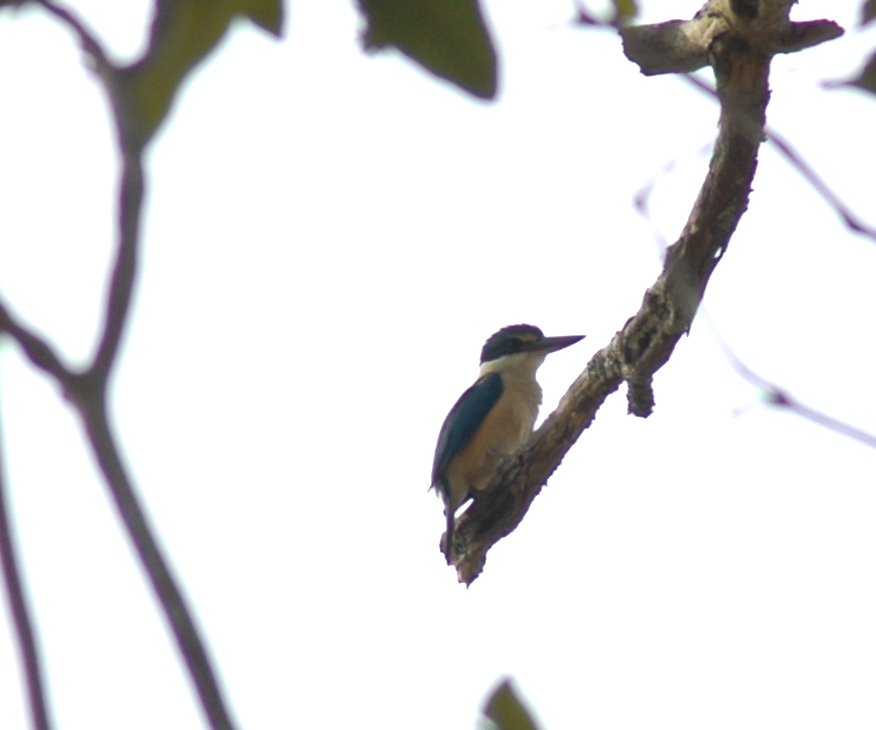
Sacred Kingfisher
which was nesting in this tree.


Black-faced Cuckoo-Shrike flying over me.

Satin Bowerbird waiting near his Bower

Satin Bowerbird's bower is a display ground - not a nest.
Blue "toys" scattered on the far side of the Bower.
Mostly blue plastic - straws and bottle tops
Some Crimson Rosella tail feathers (blue ones).

Next door to my motel there was a clump of
"Wild Tobacco" plants where the local
Cattle Egrets assembled each night to roost.
Safety in numbers, presumably.

Several Helicopters were being used by the RFS
as there was a large fire burning to the north from Gloucester

Male Australian King-Parrot
This bird flew into the Motel grounds while I was watching.

Male Pied Butcherbird
Two adult Pied Butherbirds and a chick


It was the presence of the chick which
presumably triggered this and other similar
divebombing displays.
One the second morning, the air was clear of smoke
and this was the view from our Motel.

A massive rock face is a feature of the Buckets Range.

Full view of the Buckets Range.
Wild Country by any measure.
Talking of wild country
It seems this geography has inspired the locals
to "go feral" - at least in their slogans.
lets hope it is merely a "bluff"


Wednesday, October 20, 2010

So much happening, so little time

This week a "Large Tongue Orchid" (Cryptostylis subulata) which I have been observing for four years (if not five) flowered for the first time.

I first saw that it had formed a flowering stem back in mid August. It opened on Monday. More than two months after the stem and buds first started to form.

This plant is growing in a dark Melaleuca thicket
in a bed of deep moist leaf litter.
I estimate it is in about 70% shade.
A most atypical habitat for this species.
The same flower stem today (taken with flash).
This is a tall Orchid, the stem reached to the top of my pocket
That is approx 90 cm, and the stem is still growing.
As seen from above, you can see
why it earns the name "Cow Orchid".

The lateral sepals roll themselves closed
and appear to look like cow horns.
Seen from underneath.
The flower has dark red glands along the centre of the labellum.
The column can be seen underneath the labellum.
(click to enlarge the image).
These Tongue Orchids are perhaps the most sexually explicit
of all Orchid flowers that I know.

As for the "so little time" -
The Bowerbirds were in a feeding frenzy to day.

The first of my Herbaceous peonies opened to day;
The next two Tree Peonies were showing colour;
There was an amazing sunset (which I did not photograph)
but I was able to share it with Tony and Anna Williams
who happened to be passing by,
as the sun was setting.

Saturday, October 16, 2010

Aphrodisiac toys for a Bowerbird

I have always regarded the blue bits of plastic (and feathers) which Bowerbirds collect - to be "trophies" (to show off their masculinity). But my brother Brendan has persuaded me that their real purpose is as "aphrodisiacs" - to please the female birds.

Anyway, I had a little time to spare the other day, after a careless demounting from a 3 step ladder. In other words I fell off it as I was getting down, and I needed to take a rest, to get over the physical shock. So I parked myself inside the back door window and waited to see if the Bowerbirds would steal the blue plastic pieces which Brendan had put out on the table outside.

Of course, we knew they would only last a few moments, as the male Bowerbirds collect blue items to decorate their display Bowers.

Here's what happened.

A point to note, this bird is an immature male. It still has the green plumage, but the coarse feathers have changed to smooth lines, especially around the neck and face. The top of the head is very smooth, with just a hint of blue-grey tonings. Nothing like the ultimate Satin Blue of the mature male, but he is "on the way".
The bone colouring of the beak is also developing.
This bird has a golden yellow feather in his wing, which helps me identify him.
Finally, this bird is super competitive - being outranked only by the Blue Bird(s). In turn, only a Currawong holds enough power and presence to dominate the feeder over a male Bowerbird in all his glory.

The Approach
picking up the Ring.
But wait - there's more.
Picking up a second piece.
Look at me! I've got the aphrodisiac toys.
Could I possibly get more?
Lets have a close look again.
What're you looking at?
Click to enlarge the image.
The bird is staring straight at the camera.
I'll settle for this lot.
Of course, the Blue male (or one of them) came back shortly afterwards and cleaned off the remaining blue objects. It is a very competitive world out there in the Bowerbird hierarchy.

Saturday, September 18, 2010

Crazy Eyes - (Satin Bowerbirds)

Here are some images of the heads of Satin Bowerbirds.

One cannot help but be fascinated by these birds when they are so active in one's backyard.

A female Satin Bowerbird.
The eye colour shows blue in this image (no red),
but that might be a factor of the light (at the time this shot was taken)
or possibly it might even be a factor of the season.
Note the dark beak of the female
and the yellow flecked feathers on the throat.
Bowerbirds are not easily ignored.

This one is an immature male.
It is developing the bone-coloured beak.
Its head and neck feathering is smoother (less harsh markings)
than the female and juvenile birds.
Besides, who can ignore these crazy eyes?

The Male, in prime condition like this is not to be ignored.
He dominates everything in the backyard,
with the exception of the Pied Currawongs.
These birds are more likely to hang around
(than the Currawongs),
so they end up getting the "lion's share" of fruit on the table.

Wednesday, September 01, 2010

Satin Bowerbird's Bower

My friend Joan Freere rang me this morning to tell me about a Satin Bowerbird's bower which she found in the Robertson Nature Reserve this morning. Joan was in there, doing some weeding, as a volunteer, to help maintain the Nature Reserve in good condition.
My brother, Brendan, and I went in at lunchtime, and Brendan took the following snaps.

Bower as first approached.
Look for the blue "decorations".
The Bower is just to the left of the blue items.
(click to enlarge image)
A slightly closer shot.
Here you can clearly see the decorations are in front of the "Bower".
Blue decorations include the Bowerbird's favourite,
the blue tail feathers of Crimson Rosellas.
This Bower also has some Rosella wing feathers,
which show some light blue colour.

(Rosella wing "flight feathers" are more curved than tail feathers).
There are also some pieces of blue plastic (which they also love).

*****

Here is a straight-on photo of the Bower itself.
(Click to enlarge).
The "U-shaped" structure has two tall sides, and
the central part of the Bower is a flattened "floor".
The sides are curved upwards and over,
nearly, but not quite, meeting over the top.

Another feature of this Bower is that
there are many fruit of a local plant,

the blue-flowered Solanum pungetium, placed in the bower.
But the fruit are green, not blue.
Hmm, interesting, but a bit of a puzzle.
These rounded fruits are clearly visible on the ground
in the very foreground of this image.
(You need to have enlarged the image to see them.)

*****


And just to remind you about the amazing "Blue Bird" itself
here is one of many shots I was able to take yesterday at home,
looking out from a partially opened back door.
The male Bowerbird is generally pretty nervous,
but yesterday, he was showing off, particularly to one female.
Here he is on the feeder, near an orange.

It is worth clicking on this image, to see it better.
Just about everything about this amazing bird is blue.
His eye is violet blue, (with red veining)
and in this particular shot you can see he has
a bright blue ring around his eye.

You can see the amazing sheen on his feathers.
He is so "reflective" that he generally looks shiny black.

The yellow background colour comes from some wattles in the far distance.

*****

Post Script:
Brendan took with him several pieces of blue plastic, as a "test".
He left them on the ground
some 30 metres distant from the bower.

We walked away, and came back some 15 minutes later.
Both blue objects had been collected by the male Bowerbird
and placed amongst his other decorations
in the front of his bower.

One was a small blue bottle cap,
the other a flat piece of blue plastic.

The photos were taken first,
so those objects are not in the photos above.


I find it amazing that the Bowerbird is so "alert"
to new blue objects in his "territory"

that he immediately collected these "new" blue objects
and placed them within his bower, within just a few minutes.

I would remind you that the
habitat in the Nature Reserve
is very dense vegetation -
tall trees and vines, with dense shrubbery.

The two blue objects Brendan left there

were not placed close to the bower,
well, not in line of sight from the bower, anyway.

Saturday, August 07, 2010

Yet another shot of a Bowerbird.

This morning I realised I had run out of Apples to feed the Satin Bowerbirds and Pied Currawongs and the Lewin's Honeyeater.
Shock Horror!

I decided to try an Orange.
It was a nice big juicy Orange, but as I personally do not like Oranges (too acidic for my preference) I was sceptical about how the birds would react.

Silly Me.

The birds were all over the two half oranges in no time flat.
They pecked it, they drank the juice, and even had a bit of a peck at some of the skin.
Click to enlarge the image.

Anyway, I took another image of the male Bowerbird (through the Kitchen Window, yet again). But this shot is a bit better than the best one I showed you a few days ago. I adjusted the camera settings somewhat to compensate for the ultra dark plumage of the bird. Consequently he is showing more of the famous glossy plumage.

Wednesday, August 04, 2010

Blue Bird (Male Satin Bowerbird)

The adult male Satin Bowerbird who visited me this morning is a wonderful creature. The more so when seen in full sun. The glossiness of his feathers is amazing. And so are his blue eyes!
Here he is staring straight at me,
while I am behind the Kitchen window looking at him.
These birds tend to be shy, and are wary of camera lenses.
(Click to enlarge image)
Having decided that I am no threat to him
he starts to peck at the half apple on the Bird Feeder.
(Click to enlarge image)
Note the eye colour. Also the ivory-coloured beak, which is one of the "changes" which one can use to detect younger males which have not quite matured into the "Blue Bird" phase. If you see a "green bird" with that colour beak, it is definitely a male, about to change to the fully mature plumage.

Monday, July 12, 2010

St Francis of the Bird Feeder? Not in Hi-Vis!

My brother, Brendan, will have to lose the "Hi-Vis" shirt if he hopes to charm the Lewin's Honeyeater to take food from his hands.
In fact, the bird was fairly relaxed in his presence, and moved in to feed on the Melon, while Brendan was only one and a half metres away.
Here you can see the Lewin assessing any risks before moving in..
And down it goes, with the brush-tongue lapping up the juice.
For most Honeyeaters, the juice is of more interest than the fruit tissue.
Several days ago I showed the Brush Wattlebird "lapping" the juice
from the outside of the Melon, rather than pecking at it,
as the Bowerbirds do.

Friday, July 09, 2010

Birds on the Feeder

A friend of mine had planned to come over today, because I had told her about my Bowerbirds, and she said she had never seen one (presumably she means "up close enough to recognise"). I feel sure everybody in the Southern Highlands must have seen a Bowerbird at some stage, but perhaps not. Certainly in Robertson and other highlands villages close to the escarpment, they are common, and gardeners regard them as pests.
Anyway, this afternoon, on schedule the birds started coming in for the fruit platter on display on my back deck. This is the "Feeder" which my brother has built. Did I say he is very proud of how well it works?
Well, the first to arrive today was the "Blue Bird" - the adult male Satin Bowerbird. He was very wary of me, and so I had to use a long lens through a partially opened doorway, to get any sort of shot at all.
This green bird is more relaxed and less "flighty" than the Blue Bird.
This bird is a juvenile of indeterminate sex.
With a beak full of banana, it is lining up already for another grab.
Here we go!
Note the yellow gape, indicating its relatively young age.
Here is a Brush Wattlebird on a juicy piece of watermelon, on the feeder.
It is licking juice from the fruit, not "eating" the fruit.
Here it is, in heavily zoomed image, with its brush tongue out,
wiping over the fruit, to collect the juice.
When the larger birds are feeding, the Lewin's Honeyeater hangs around,
waiting for the table to be clear of the competition.
While it loses out in size, it makes up for it with persistence.
Anyway, if my friend does come over next week, I am sure there will be more Bowerbirds for her to see.