Christmas Bells

Christmas Bells
Christmas Bells - Blandfordia nobilis
Showing posts with label Kingfisher. Show all posts

Monday, October 29, 2012

Quick trip to Gloucester

I visited Gloucester this last weekend, to participate in the "Groundswell Gloucester" Conference.
I have uploaded a series of images of the main speakers (not all, however, as the conference included a series of workshops, so inevitably no-one sees or hears everything).

I have also uploaded here a few images of some of the birds I saw in the grounds of the township of Gloucester.

As usual, you can click to enlarge the images to see the details better.

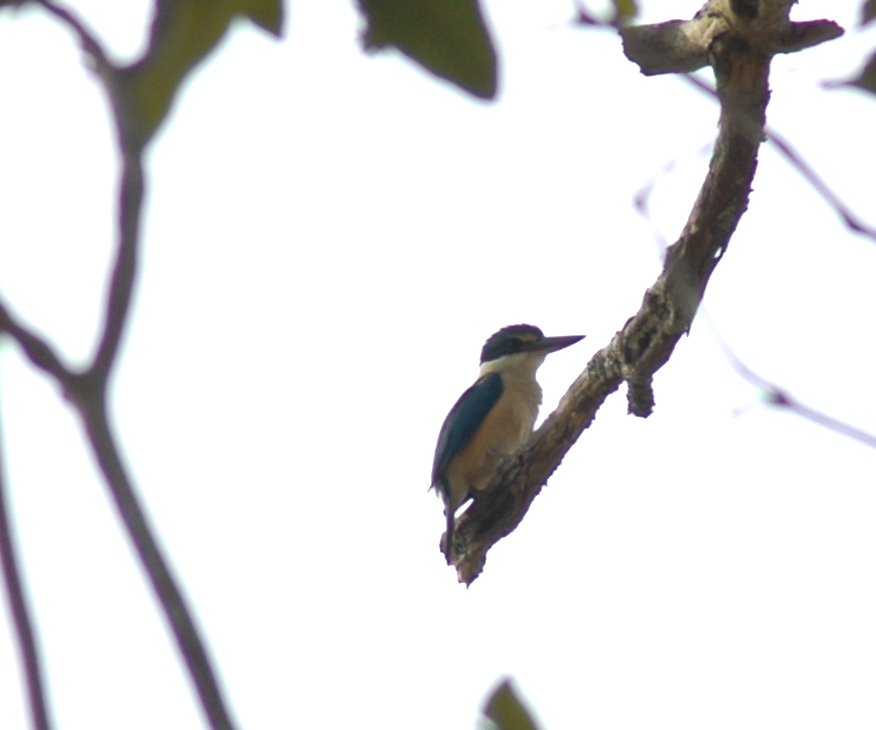
Sacred Kingfisher
which was nesting in this tree.


Black-faced Cuckoo-Shrike flying over me.

Satin Bowerbird waiting near his Bower

Satin Bowerbird's bower is a display ground - not a nest.
Blue "toys" scattered on the far side of the Bower.
Mostly blue plastic - straws and bottle tops
Some Crimson Rosella tail feathers (blue ones).

Next door to my motel there was a clump of
"Wild Tobacco" plants where the local
Cattle Egrets assembled each night to roost.
Safety in numbers, presumably.

Several Helicopters were being used by the RFS
as there was a large fire burning to the north from Gloucester

Male Australian King-Parrot
This bird flew into the Motel grounds while I was watching.

Male Pied Butcherbird
Two adult Pied Butherbirds and a chick


It was the presence of the chick which
presumably triggered this and other similar
divebombing displays.
One the second morning, the air was clear of smoke
and this was the view from our Motel.

A massive rock face is a feature of the Buckets Range.

Full view of the Buckets Range.
Wild Country by any measure.
Talking of wild country
It seems this geography has inspired the locals
to "go feral" - at least in their slogans.
lets hope it is merely a "bluff"


Tuesday, March 29, 2011

Gang-gang Cockatoo hit by car.

Near Moss Vale the other day I saw a mid-sized grey lump beside the road. Naturally I stopped (you know me well enough, dear Reader).


Image alert:
If you are distressed by seeing images of dead birds (no matter how interesting I may find these images) please look no further. Kindly come back tomorrow
.
.
.
The good news is that I also have images of live Gang Gangs further down the page (and a link to the sweetest "lovey-dovey" image of a pair of Gang-gangs you could ever hope to see). You can skip right to the end, if you wish (check the link in the very last paragraph).
.
.
This road-killed bird is a female Gang-gang Cockatoo. (Callocephalon fimbriatum)
 Note the light-textured crest feathers.
Female Gang-gang Cockatoo (a road-killed bird)
 Viewed from beneath you can see 
the diagnostic coloured marks on the chest and abdomen.
"The adult female has a dark grey head and crest, 
with the feathers of the underparts edged pink and yellow."
Note also the light-textured crest feathers
Female Gang-gang Cockatoo (a road-killed bird)
One of the things which always fascinates me
is the different structures of birds' feet.
With a bird in the hand, even a dead one,
I like to study how the toes are structured.
Toes of a Gang-gang Cockatoo.
This image shows the two rear toes - (one on each side)
and the two front toes curled neatly between them.
This structure is known as "zygodactyly"
It is found in all Parrots and Cockatoos
and in other birds, including Cuckoos.

Here is a link to the very different foot structure of a Sacred Kingfisher
The King-parrot has the same structure as the Gang-gang, of course.
The Painted Button-quail has a totally different structure,

 I promised you photos of live Gang-gang Cockatoos.

Here is a female, chewing on Hawthorn Berries.
Note she is using the left foot to hold the food.
Female Gang-gang Cockatoo eating Hawthorn Berries

This male is also holding his food in the left foot
The tendency to use the left foot is noted
in the Birds in Backyards information on this species.
(See the box: "Did you know" below the map on that site)
Male Gang-gang Cockatoo also eating Hawthorn berries.
This image shows why Gang-gang Cockatoos 
are subject to road accidents
(Click to enlarge)
A flock of Gang-gangs in a Hawthorn tree
These birds, when they find a good food source, 
tend to sit there.
Often they feed low down.
But being relatively large birds, as they start to fly
they tend to drop down in order to gain speed, 
as they fly off (from their perch).
Being perched as low, as they are here, 
that means they tend to fly off at car height.
Bang!
And now something to cheer you all up, here is a lovely image of a pair of Gang-gang Cockatoos grooming eachother. The image was taken by Julian Robinson and is on the Canberra Ornithologists Group photo gallery. With such loving attention between the male and the female, it is no wonder these birds are reputed to mate for life!

Sunday, March 01, 2009

NPA walk to "The Grotto" - Belmore Falls Road

Today I led a walk to "The Grotto", for the National Parks Association, Southern Highlands Branch. This spot is found by following a fire trail which runs off Belmore Falls Road. It is one of my favourite local haunts, and I was happy to lead this group of about a dozen people. They were very pleasant company, the weather was nice, and we saw some good birds and interesting plants and natural features of the bush.

I went out there on Thursday, to do a reconnaissance trip, and took these photos. Today, when we got close to the creek, I asked everyone to stay quiet, so we could sneak up on any Wood Ducks which might have been there. We were rewarded with a sight of about 20 of them, perched on various dead trees in the creek, and some swimming. A lovely moment or two, before they all took flight.
The creek is known as Barrengarry Creek, but it used be called Wallangunda Creek, which I think is more accurate. It does run down to Belmore Falls, where Barrengarry Creek does indeed fall into the Kangaroo Valley. But there are several creeks which flow into this little creek prior to the Falls - hence my doubts about the name, despite the fact that the Council has changed the name on one of the road signs, recently.

We then went to the nearby waterfall which carries the name of "The Grotto". In my mind, this reflects the Catholic heritage of the Robertson district, more than anything. There were no apparitions of the "Virgin Mary" while we were there to day.

But moving on from the issue of the name, it is a truly lovely spot. I love the sound of the waters crashing onto the rocks below this little waterfall. It is about a 3 metre drop, so it barely qualifies as a waterfall. But it is a lovely spot. Because the drop falls onto a rock shelf, instead of a pool of deep water, it gives one the unexpected opportunity to walk right up to the falls. One could literally have stood there, and showered under it, if one felt inclined to do so.

There were some flowers on the Fieldia australis which grows underneath the waterfall, on the rock wall, as well as more prolific native "Rainforest Spinach" (Elatostema reticulatum).
Here was a very nice seedling Coachwood plant, growing in a dark spot, beside the creek. Its leaves had this amazing purplish tinge to them. Very striking indeed.
The best moment for me, this morning, was when I heard a slightly metallic twittering call of a bird, as it flew past us, very fast and low, along the creek. I saw a flash of brilliant blue and knew I had just been passed by an Azure Kingfisher. Then I looked up along the creek, and there was another one, perched in classic Kingfisher pose, on a dead branch above the creek. Of course I had the wrong lens on the camera, and by the time I had changed lenses, the bird had flown.

I will take the opportunity to direct you to this image by my fellow Nature Blogger, "Tyto Tony", from Ingham in Queensland (where the floods were). He has posted a stunning image of an Azure Kingfisher - the likes of which I can only ever dream of snapping.

Sunday, December 28, 2008

Kayaking on Kangaroo River

Yesterday, I was lucky enough to be invited to join my friends Kim and Peter on a kayaking trip on the Kangaroo River.

We hired the Kayaks from the Camping Ground in the centre of the village. Mike fitted us with life jackets, and then put the Kayaks on the trailer to take us down to the river, just above the historic Hampden Bridge at the Kangaroo River crossing.

This Google Earth image shows the Moss Vale Road crossing the Kangaroo River at the top right corner of the image. That is where the Hampden Bridge is. At the left, where the Bendeela Road meets the River, that's where our rendezvous point was.
We were told to go down the river until we came to the Bendeela Camping Ground, go to the second beach past the main Camping Ground (but not to go as far as the Bendeela Pumping Station). I made a joke about not trusting myself to go there, because I would want to spray paint it with graffiti, like "Don't pump the water to Sydney - leave it in the Shoalhaven River". My comment drew an appreciative nod, which is hardly surprising, in Kangaroo Valley where the locals are very politicised about Sydney and Shoalhaven water issues. Of course, I am not a graffitist. I do my campaigning on a more direct basis.

Back to the kayaking ... Mike made allowances for us to take two and a half hours, on the river, but in fact we did not need as long as that.

The Kangaroo River was quite low- about 9 inches (approx 240mm) below the normal level, judging by the normal "high water " marks on the rocks. This soon became an issue for us, especially me, as I was grounding on the rocky base of the river very soon after we started off.

Once we passed under the old bridge, we moved out into clear, deep water, and started to drift along, enjoying hearing many birds, and seeing lots of Water Dragons on the rocks and logs in the river. One even swam straight past all of us, so close we could have touched it.

Brush Cuckoos, Fantailed Cuckoos and Black-faced Monarchs (a.k.a. "B-f Flycatchers") were common.

Then we came to more shallows and even a few "rapids". Bearing in mind that our group (especially me) were relatively inexperienced Kayakers (as were the German tourist also on the water with us), any kind of rocky obstructions in the river bed will be classed as "rapids". Sure enough, after negotiating the hardest part of this particular "rapids", I missed avoiding the last two rocks, and got my Kayak caught sideways against these two rocks, and the inevitable happened - I tipped in sideways. Fortunately the water was not deep, and not too fast, so I could stand up safely, and while I hung on to my Kayak, I lost the paddle. Other members of the group retrieved it for me.

Oh, well I figured I had fulfilled my social function on the trip - of being the "Bunny".

Peter noted what I had managed to keep my trademark blue terry-towelling hat dry! I was glad I had not brought my camera with me - or I would not be laughing.

Further down the river, it broadened out, and we saw more birds - White-faced Herons, Black Ducks, Wood Ducks (Maned Ducks a.k.a. Maned Geese.) We also heard many Koels, a few Kookaburras and saw many Dollar Birds, perching right at the tops of River Sheoaks. One (only) Yellow-tailed Black Cockatoo flew straight along the river above us, squealing all the way.

Finally, just before we left the Kangaroo River, I saw the one bird I really wanted to see - an Azure Kingfisher. To top off my viewing experience, the bird flew to a low branch, then dived into the water, caught a small fish, and flew back up again. This is the classic Azure Kingfisher experience. Unfortunately Kim missed out on seeing it, even though we doubled back to try to spot the bird again.

For everybody's benefit I will post a link to of Tyto Tony's blog image of exactly such a sighting.

After seeing my iconic bird, I was happy to drift down to our rendezvous point, and wait for Mike to take us back home. A perfect way to spend a holiday morning.

Of course, being in Kangaroo Valley, we finished off with lunch at one of the many cafes there.

A thunderhead was building, and it drifted up the Upper Kangaroo River Valley, and dumped heavy rain on Robertson in the afternoon, for about 30 minutes. Officially we only got 9mm, but I think it might have been more than that, at my place.

Post Script:
I would never wish to camp at the Bendeela Camping Ground, if the patrons who were there yesterday were typical of the clientele. The rest of the trip was wonderful, but I could do without Bendeela Camping Ground.

.

Thursday, November 06, 2008

Sacred Kingfisher

Reader alert: This is another road kill story - so if you find photos of freshly dead creatures offensive or "tasteless"- kindly come back tomorrow.

Today as I was driving to the Barrengrounds to show some British birdwatchers around there, a Sacred Kingfisher (Todiramphus sanctus) flew into the wing mirror of my car. It was killed outright. I stopped and went straight back, and the bird was lying there, intact. it had not been squashed, simply stunned by the impact, but dead. It was a shame, but it was totally beyond my control. The bird literally flew into my car. I decided to make the best of it, to take some photos for reference purposes - and to share them on the Blog.

Firstly this is what a Sacred kingfisher looks like, close up. It is a beautiful bird, with a subtle blue and green colour blend on its back and wings. Underneath it has a buff colour. As with all Kingfishers (including Kookaburras), it has a huge head in relation to its body (compared to most other types of birds).The colours of the feathers on the back and wings look quite different, depending upon which direction one is looking from. *** This is because of the high sheen on the feathers, and hence the reflectivity of the colours. In one direction, the blue colours are darker and richer. In the other direction, the greenish tones (in the same feathers) are more prominent. I have used the background cloth as a guide, to ensure the "lightness" of the two images is as equal as possible. So the variation in colour of the birds feathers is a genuine "trick of the light", not because of variation in lightness of the two images. I have not altered the "colour balance" in any way.
The next image is of the head and beak of the kingfisher - seen at close range. For some reason the dot of ochre colour in front of the eye, seems very prominent. It is a genuinely beautiful bird.
The next feature of interest in Kingfishers is their foot structure. What you can see here is "normal" for Kingfishers. They have 3 forward pointing toes, and one rear pointing toe. But two of the toes are partially fused. You can clearly see what I mean in the upper foot in this next image. The two outer toes are joined much further along the foot than the inside toe - which separates from the foot pad at a much lower level.
From above, the toes are also clearly visible as being partially fused. This structure is known by biologists as "syndactyly" - meaning joined toes (from "syn"- together and "dactyl" - toe or finger). In human medicine, this term is used for an unusual condition, where two toes are partially fused.

In birds, as Wikipedia explains: "Syndactyly" ... is ..... that the third and fourth toes (the outer and middle forward-pointing toes), or three toes, are fused together." This foot structure is typical of Kingfishers and their relatives, Rollers ("Dollar Bird") and Bee-eaters ("Rainbow bird").


It is from structural features such as this that taxonomists trace related groups of birds. In Marsupials, they look at the toe structures, and teeth, to draw conclusions about related groups of animals.

Here is the group of bird watchers I was with today - my friends Len (right) and Jan (left), and British visitors, Elizabeth and Tony. In the background you can see the coast, near Kiama. This photo was taken at the "Illawarrra Lookout" in the Barrengrounds. It is a lovely spot, directly beside the top of the Escarpment, overlooking Jamberoo. On our way back to the car park, we saw an Echidna walking slowly across the track. It stopped for a bit of a scratch, which looked like quite process. My third Echidna in a week!


*** Editor's note:
The angle of the sun, relative to the bird and the observer, can seriously change the perceived colour of the bird. That's what I wanted to say last night, but could not think how to express it clearly.
Published photos of this species vary from light bluish-green to deep blue (with no visible trace of green). That's why I published the two photos of the same bird from different angles - to show the variation is to do with angle of light - not a difference in the birds.
Thanks to Mick for raising the query in the "Comments" about her old photos of this species, and the different colours she has recorded.
Denis