Christmas Bells

Christmas Bells
Christmas Bells - Blandfordia nobilis

Tuesday, March 09, 2010

Windy day blows for the Eagles

Today was a clear sky, but with a very gusty south-westerly wind. The rear of my house (and the back deck) looks south-west, over a long sloping gully. So, when the wind blows up the valley it is perfect for Eagles to be able to soar and circle, rise up then stall and dive. Good fun acrobatic stuff of which Wedge-tailed Eagles are the masters.

A pair of Wedges soared and circled around the valley below my house for more than 35 minutes today. This was the best display I have seen at my house.
Here, the bird spotted something of interest
and immediately opened its great talons,
preparing itself for an attack, which did not eventuate.
Note how the right wing tip is raised,
whereas the left wing is "feathered" allowing air to pass through
- all part of the art of maintaining perfect control.

Interestingly, at no stage were they challenged by the resident Magpie clan. Whether this is because even the Maggies are wary of taking on two Eagles together, or whether it was simply that the strong wind upsets the Magpies (which were quiet all day long) I cannot say for sure. But the observation is there - no challenge to these great birds from the Magpies. Normally one can usually expect 3 to 6 Magpies to sound the alarm when any Bird of Prey enters their territory.
Probably my favourite shot,
as it shows how low the bird was (albeit briefly).

Today we saw a Grey Goshawk (briefly) then these Eagles, and finally, at the end of the day, a lone male Peregrine Falcon came and gave a brief display flight around the valley, culminating in a flight up the valley with the wind, then he turned into the wind, went into a perfect "stall", and hung there, totally still, before zooming back down the valley and out of sight. Again, not one of these birds was challenged by Magpies.

Swifts zoom past Robertson

I know, I know, I know - Spine-tailed Swifts (as I grew up calling them) are now officially called "White-throated Needletails" (Hirundapus caudacutus). But that is a terribly clunky name, for which we owe a debt of gratitude to the "taxonomists" who set the international rules of nomenclature for all living creatures - birds, animals, plants, fungi and all the other creatures which swarm on the face of the earth, and especially within its bowels.

In this case, the rules are simple, we fit in with the names used in other countries where our birds are also found. If they had a name for a bird we subsequently found and named here, then that first name rules. That's roughly how it works, anyway.

Our explorers were a slack lot, and didn't "find" Australia until 1770 (well, officially, any way), and by then Asia was well and truly on the way to being exploited by Europeans. So in the world of taxonomy, their (European) names win out. Not the names the Japanese or the Indonesians use (of course) that would be too simple by half. No, I mean the names which the German, Dutch, French and English scientists gave to these Asian birds, back home in their dusty museums.

Hence "White-throated Needletail". You can see this particular feature of this bird, in a rare image of a dead specimen of this species, which happened to be found dead in Canberra. But, looking at that photo, you have to ask - who else but a Museum worker would suggest this obscure and nearly invisible feature of a bird be used to signify the generic name of this remarkable, fast-flying bird?
***** ***** *****

Why am I writing about Needletails? Well today I managed to take a few snaps of several birds as they flew fast and low past my place, this afternoon. This is the first occasion I have managed any sort of photograph of White-throated Needletails.

Only once before have I ever photographed Swifts, and those were the even rarer Forked-tailed Swifts. But they were very co-operative, and a large flock circled around my house for about 15 minutes, and then disappeared. A first and only visit.

I had seen several Needletails two weeks previously, but I did not manage a photo on that occasion. This is only the second sighting of this species for me, this summer.

"Swift" sightings are always exhilarating, as the birds fly so fast, and zoom past you in such haste that you have to swerve your head to follow their movements.
And it is all the more remarkable when you realise that they are not just flying, they are feeding on the wing - catching insects as they go.
How remarkable must their eyesight be - to see an insect, when travelling in excess of 100 Km/hr., and then steer towards that insect, open one's beak and catch that flying insect?Every now and then one gets lucky enough to say - that shot is as good as I can hope to get tonight - with this light, and this lens. Thank you and good night!
And as my Brother Brendan has just pointed out to me, this photo is worth showing - if only for contrast in wing shape and performance. As we were sitting on the back deck, watching the Needletails zip past, a small flock of Black Cockatoos flew past. Here they are.

Check out the remarkably different wing shapes and wing flap styles and of course, the very long tails on the Cockies.
Those wing shapes and the tails, contrast against those of the Needletails whose tails have been reduced to mere stumps with fine needles in them (which they apparently use for perching on rocky cliff faces) - when nesting in Korea and Mongolia.

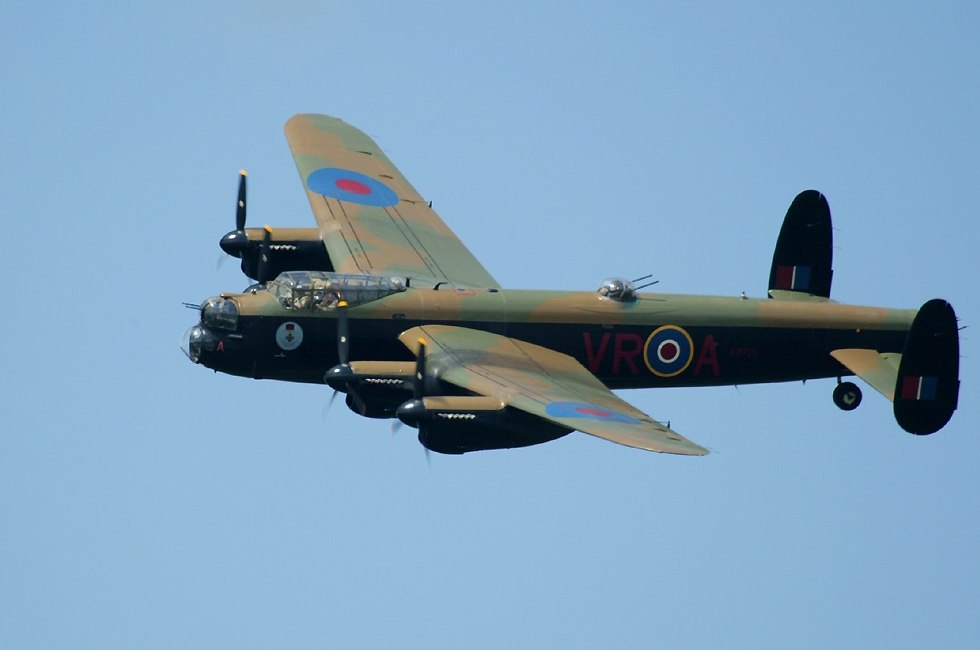
In aeroplane parlance, the Needletails are obviously the F-111 (with adjustable wing angles) and the Cockies are World War 2 Lancaster Bombers. Both can fly - but they do so in a very different manner.

Monday, March 08, 2010

Robertson Big Spud Face on YouTube

Well, this story is bigger than Ben Hur!

Today I was interviewed about it on the local ABC Radio by Nick Rheinberger, (which by reports went well). I was also contacted by the local Newspaper (Southern Highland News). We shall see how that comes out on Wednesday.

The SHN reporter, who it seems is new to the Paper, and to the Southern Highlands, asked me if the Council had taken down the "Big Spud Face"?
My brother and a friend who was with me at the time said that I blurted out an unprintable comment, along the lines that it has nothing to do with the Council, and "besides they wouldn't f....'ing-well know where Robertson is.....". Something like that, anyway.
I wouldn't have said that --- surely not?

The artists who put up the Big Spud Face were keen to monitor the public reaction to it, so they set up a time-elapsed video in a strategic location where they could monitor visitors and their reaction to it.

Here is a link to the video which is now available on YouTube.

I am pleased to say that my little blue Daihatsu Feroza 4WD vehicle is in frame for the first 8 seconds of the video. But just look at the number of people who swarmed all around the Big Spud, and took photos of themselves in front of the Face.

This is very gratifying to see, and is great evidence of the popularity of the Big Spud Face.

The artists are considering revealing their identity to the Southern Highlands News, if the story is treated sympathetically this week. Lets hope it is.

Sunday, March 07, 2010

Big Spud has "lost Face"

Unfortunately, the locals of Robertson never fail to disappoint me, when it comes to lacking imagination.

Someone (persons unknown) has taken it upon themselves to remove the Mr Potato Head face, which was adorning the Big Spud yesterday.

One could say that the "Big Spud" has "lost face", and Robertson is all the poorer for it.Are we back to the Big Turd?

I am afraid that is what seems to fit the level of appreciation of some of the Robertson locals, who find it appropriate to "trash" the hard work of some of the other locals who wished to brighten up the village, just a little bit.

The face was a harmless joke and it did not "damage or deface" the property of the Mauger family, who own the land, and whose family members built the "Big Spud" in the first place. The face was topical and relevant, and inoffensive.

Lets hope that whoever removed the face puts it back again.

In just 24 hours it did much to brighten the image of Robertson.

Saturday, March 06, 2010

Big Spud gets a face.

Well, it was a big weekend in Robbo. You already know about the preparations for the Robbo Show. But the really big news from Robbo today is that Mr Potato Head visited Robertson, and "personalised" our famous Big Potato (known locally as the Big Spud).

This seems entirely appropriate, as it seems the facial features were always intended to be disembodied, and to travel the world, in search of Potatoes to "personalise". That is what has happened today, in Robertson.
Wikipedia tells me that: "Mr. Potato Head was born on May 1, 1952. The original toy cost $0.98, and contained hands, feet, ears, two mouths, two pairs of eyes, four noses, three hats, eyeglasses, a pipe, and 8 felt pieces resembling facial hair. The Original Mr. Potato Head kit did not come with a "Potato Body," so parents had to supply their own potatoes for face-changing fun."

I welcome the"Face-changing" fun demonstrated overnight in Robertson, by a person or persons who for legal reasons ought remain anonymous (for we certainly do not wish the Hasbro Lawyers to descend upon the village).

I think that as Mr Potato Head has been out there floating his disembodied parts around the world since 1952, it is high time his eyes, nose, and teeth landed in Robbo on top of the world-famous "Big Potato", and along the way, helped rescue it from its alter-ego title of the "Big Turd".
.

Thursday, March 04, 2010

Robbo Show all set to go.

Because the cut flowers are the most fragile and transient items exhibited in the Robbo Show, they are the last items to be prepared.
The Pavilion team, led by Katherine Wood, supervise the setting up of the final displays, after the last exhibitors have put in their flowers. Well, at least that is how it is meant to work. Some, especially the Dahlia exhibitors and some Rose exhibitors were there fussing around till the very last moment. Some people even take it upon themselves to offer advice to the Show President, Show Secretary, Pavilion Head Steward and anyone who will listen, on what we have done wrong, and how we ought correct things for next year.
In accordance with true country politeness, we allow them to have their say. After all, the world would be a dull place without some people who know everything about their favourite topic, wouldn't it?
The judging will start at 7:00am sharp tomorrow morning. I will be there, as one of the Stewards, just helping to write out the ribbons.
I am able to publish photographs of these these flowers for they have not yet been judged.I have seen (and indeed photographed) many of the other entries in the cooking, the jams and preserves, the Fruit and Vegetable sections, but as they had already been judged, it would be inappropriate to "let the cat out of the bag" by accidentally showing entries with ribbons draped over some and not others, until the doors open tomorrow morning.

Katherine Wood has said already that she is very happy with the standard of entries in the Pavilion, this year. It looks like it will be a good show. Lets hope the weather is not unkind to us, that's all.

Wednesday, March 03, 2010

Kangaroo Apple - "It is in dying that I live"

Did this Kangaroo Apple read the famous "Prayer of St Francis"?
Or indeed was St Francis inspired by seeing a plant giving its life as completely as this plant?
  • "it is in dying that we are born to Eternal Life."
I photographed the plant by flash, at night to accentuate its bareness
and the masses of brightly coloured berries.

This next image is of a normally fruitful Kangaroo Apple (Solanum aviculare) - with leaves and berries.
The top plant is not totally unusual, but it is an extreme example of a phenomenon which I have observed before - which is that some Kangaroo Apples lose all their leaves, while fruiting to an extraordinary extent, prior to the entire bush dying.

Kangaroo Apples are relatively short lived plants (5 or 6 years generally). They normally fruit heavily, but sometimes, when they fruit excessively, they do as this top plant has done - it has shed all its leaves and is bearing vast numbers of berries.
After such excessive fruiting the entire plant dies.
But of course, genetically, the plant lives on - through its progeny.
Hence the metaphysical and meditation interpretations coincide.

It was this which put me in mind of my late Father's favourite Prayer - the so-called "Prayer of St Francis", which apparently can only be traced to a publication in French in 1912, but, hey, lets not get bogged down in historical details....

It was a Prayer which inspired my father, who, now that I think about it, was born in .... you guessed it 1912.