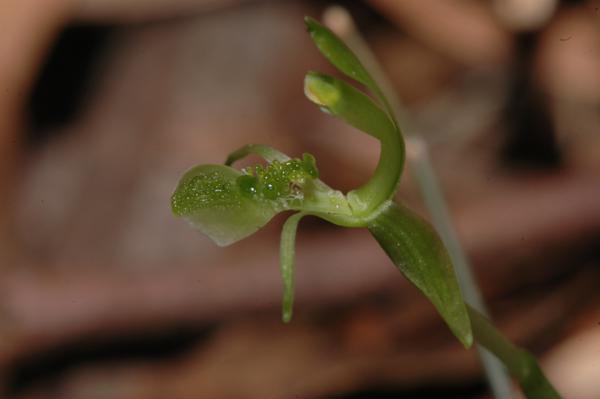
Christmas Bells

Christmas Bells
Christmas Bells - Blandfordia nobilis

Monday, September 19, 2011

West Wyalong birding weekend

These are not Robertson birds. They are birds photographed on a trip with registered Bird Banders to Charcoal Tank Nature Reserve, just a few kilometres south-west from West Wyalong.

My excuse for this indulgence (going bush for the weekend and blogging about these birds), is that I grew up with Mark Clayton, a Regional Organiser for the Australian Bird and Bat Banding Scheme who trained as a Bird Bander with my father, Steve Wilson. So there is an element of a sentimental journey in this trip for me. Mark went on to work at CSIRO, and has since retired and still bands birds as a volunteer, and helps train other banders. For me, it is a fascinating thought that I knew Mark as a fourteen year old schoolboy, and he is still banding birds in his retirement. As the French say "plus ça change, plus c'est la même chose".
I also met up with Neville Schrader OAM, a very experienced naturalist and long-standing Bird Bander himself. Neville's wife Shaydeen was also helping out. I also met up again with Anthony Overs, a senior Bird Bander and fellow Blogger, who I had met previously at Charcoal Tank. With other banders Jen, Kim and Carole and Stewart, and his son Duncan, it was a very pleasant weekend.

There are so many photos, I shall simply name the birds, with little discussion.
Hotlinks take you to other websites with more information about each species.
The image files are all relatively small (to facilitate fast loading)
But you can enlarge the images by clicking on them, to see the finer details.

Inland Thornbill - note the reddish eye and throat markings (like Brown Thornbill)

Eastern Yellow Robin
Brown-headed Honeyeater - note the difference in markings.
A Southern Boobook Owl stayed well and truly out of reach.
Head of Chestnut-rumped Thornbill. Note the pale eye and scalloped head markings
Tail view of  Chestnut-rumped Thornbill
Silvereye
Juvenile Golden Whistler (note the rufous plumage)
Grey Fantail - a dark coloured specimen displaying its tail
Horsefield's Bronze-Cuckoo
Diagnostic markings on tail of Horsefield's Bronze-Cuckoo
Double-barred Finch
Yellow (Little) Thornbill - note the fine markings around the eye
Plain olive coloured tail of Yellow Thornbill. Note the short tail.
Painted Button-quail - head and chest. Probably a male bird.
Foot of Painted Button-quail
Red-capped Robin - male
Red-capped Robin - female
Rufous Whistler - male
Rufous Whistler - female
Spotted Pardalote - male
Striated Pardalote - broad wing striped form (6 white lines on wing)
Variegated Fairy-wren = male just reverting to breeding plumage
White-eared Honeyeater - adult with grey head
White-eared Honeyeater - immature bird with green head cap, and yellow gape mark.
White-plumed Honeyeater - head and eye markings
White-plumed Honeyeater note the diagnostic mark on its neck.
White-throated Treecreeper - male (no orange spot on throat)
White-throated Treecreeper - female (note orange spot below eye)
Huge hind toe of White-throated Treecreeper. No wonder they can climb trees so well.
Yellow-rumped Thornbill

Wednesday, September 14, 2011

Sydney Rock Orchids (or are they?)

I am told that once upon a time, the rocky ledges around Sydney were covered with "Rock Lilies" (as they were known to the early settlers). They are of course, Orchids - Dendrobium speciosum (the Sydney Rock Orchid).

Sadly the rock ledges around Sydney  no longer are festooned with these spectacular flowers. There is a huge issue with illegal collection of Orchids from "The Bush".

Currently one can drive around the coastal towns and cities of the Illawarra and Shoalhaven regions and see spectacular plants of the Sydney Rock Orchid in flower in people's front gardens. Albion Park, Nowra and Kangaroo Valley all spring to mind as places with examples of plants growing happily in gardens.

Unfortunately, it is precisely because of people's fondness for these plants in gardens, they are now a rare sight in "The Bush".

It is of course, illegal to collect these plants from the Bush, but it is a difficult matter to police and administer.
Anyway, best not to dwell on the "sins of our fathers".
The same story can be told of Christmas Bells, which were once picked in their thousands, for sale in flower markets (where the sale of cut flowers is now specifically prohibited).

*****

The good news is that I can acknowledge that in some remote (and obviously un-nameable) patches of National Park lands in the lower Shoalhaven Valley, the Sydney Rock Orchids still thrive in their original (natural) abundance.
Dendrobium speciosum - on rocks
Here is a zoomed image of the same plant
Dendrobium speciosum

***************
Here is another issue.
Does Dendrobium speciosum grow on trees?
Well, yes it does!
Or does it?

*******************

Here is a fallen flower which 
at Minnamurra Rainforest reserve.
Fallen flower of Thelychiton epiphyticus
Colin's discovery led to us photographing 
the plants growing 
high in the rainforest canopy above.
Thelychiton epiphyticus at Minnamurra Nature Reserve

But if it grows on trees, is it still a Rock Orchid?
If so, is it another species?
Serious (and qualified) Orchid experts 
have debated this question for many years.
Jones and Clements argue that it is, 
and have renamed it as Thelychiton epiphyticus

That link still uses the "old name" 
but it does recognise this plant
as a different sub-species.
So, even the conservative botanists who control PlantNET
acknowledge it as a different plant, 
and accord it sub-species status.
That's a start.

This tree form of this Orchid
grows on Cambewarra Mountain
high on a rainforest tree.
Thelychiton epiphyticus (flower spray on right)
Here are some images of other, even more impressive plants, of this species growing at Minnamurra Rainforest (near Jamberoo village), part of the Budderoo National Park. The Minnamurra Rainforest is noted for its spectacular wet gorge and waterfall, and the rainforest trees. This shot was taken with a 300 mm lens. So that gives you some idea of how tall this tree is.

The flower sprays are circled in red to show where they are.
Thelychiton epiphyticus at Minnamurra rainforest.
Long may these magnificent plants survive - far out of reach of collectors.


Personal disclaimer:
I am growing one Sydney Rock Orchid plant
(a small division from an original plant) 
which was given to me by a friend who owned
a federation house in Mosman which was being sold.
After some discussion, it was decided 
to save the plant from possible destruction, 
as the new owners were planning major renovations.
The magnificent original plant was divided
and shared out to people who promised to look after it.


Tuesday, September 13, 2011

Papillilabium beckleri - the Imp Orchid

Papillilabium beckleri otherwise known as the Imp Orchid, grows in the southern end of the Royal National Park. Alan Stephenson and I went in search of it several weeks ago, and while we found plants (or Alan did and I hobbled along behind), the flowers were not quite open.

Recently, I went back there with Colin and Mischa and we found a good number of these tiny plants and, happily they were fully open. When I say fully open, the "head" of the flower (the open part) in each case is about the size of a match head. I kid you not.
Papillilabium beckleri
The structure of these flowers is that the dorsal sepal is the brightly coloured part, the labellum has two green dots, facing the front. PlantNET says: "Labellum rigidly attached to tip and margins of column foot, forming a prominent, backward-pointing spur."
In my photo, you can see the white tube in the middle of the flower. It seems from the PlantNET description that the tube is part of the labellum which leads to the "spur" which is where there is a nectary. The "spur" is the long green structure below the main part of the flower. It looks like it is a foot of the flower, but in the next image, you can see that the flower is connected to the stem from the back of the flower. The "Spur" is in fact a blind tube (behind or technically "below") the flower. This is clearly visible in the following lateral image.

Apparently these flowers are intensely fragrant, but I could not detect it. They are minute after all, and mostly were out of range of my nose (hanging above head-height, mostly, on delicate thread-like roots which we did not want to touch for fear of damaging them).

Here is the botanical illustration from PlantNET
*************

This plant is on its southerly limit in the Waterfall end of the Royal, but it is apparently a common plant in south-east Queensland. You can see the Kabi ANOS page here which tells you a bit more about this species. They have an excellent close-up photo of the flower.
Papillilabium beckleri - single flower super-cropped
Papillilabium beckleri - a full spray of  flowers
Here is an indication of how really small they are.
You can see some dead twigs,
and then a root of the Orchid dangling down
then there are several leaves,
and a spray of flowers hanging down.
The word "tiny" doesn't begin to cover it.
The generic description of this type of growth habit 
is "Twig Epiphyte".***

Go figure.
This life-style defies all human logic.
Twig Epiphyte Papillilabium beckleri hanging by its own root.
Below, you can see Misha photographing this almost invisible plant.
Mischa photographing one of the Imp Orchids
Colin photographing the same plant.

Leaves and flowers of Papillilabium beckleri
And another plant of Papillilabium beckleri
*** "An epiphyte is a plant that grows upon another plant (such as a tree) non-parasitically or sometimes upon some other object, derives its moisture and nutrients from the air and rain and sometimes from debris accumulating around it". Source: Wikipedia
Locally, the only other Orchid to fit that description is the Tangle-root Orchid.
In the Shoalhaven, Sarcochilus hillii also grows in this manner. 

Unlike these tiny "Twig Epiphytes", most other local Epiphytic Orchids attach themselves to reasonably sturdy branches. But even so, life as an epiphytic plant is precarious, being dependent upon the security of the branch or tree on which the epiphytic plant is growing. 

But Twig Epiphytes are ridiculously fragile, by virtue of the weakness of the twig to which they are attached. In fact, the Orchid roots often end up supporting broken off twigs, complete with the leaves and flowers of the tiny Orchid, actually out living their original host twig.

Monday, September 12, 2011

ANOS spring tour of Shoalhaven

Yesterday was our annual Spring tour of the Shoalhaven region for the Australasian Native Orchid Society.

It was an Australasian tour as well, with Ian Chalmers (from Sydney), Editor of the Orchadian, and the National Registrar of Judges - John Creeggan (from New Zealand) and his wife, joining us on the tour.

So many plants, so little time...

***********

Today I will simply name the main species we found.

Pterostylis baptistii in profile
Pterostylis baptistii from front, showing the pollinia behind the labellum

 
Pterostylis baptistii - my favourite image
That photo was taken with a flash held below the camera,
giving great light into the low end of the flower.
*****

from the sublime to the ridiculously minute .
Oxysepalum shepherdii (formerly Bulbophyllum)

Oxysepalum shepherdii

Petalochilus carnea (formerly Caladenia)

Dockrillia pugioniformis The Dagger Orchid
Some not quite open Dockrillia striolata flowers

A pure white form of  Petalochilus carneus

And again, from the side.
Prasophyllum elatum
A look-alike for Pterostylis pedunculata, Pt erecta

Pterostylis erecta from the rear. Note spider legs poking out from flower

Pterostylis erecta from side

Sarcochilus falcatus

Petalochilus hillmanii

Twin flowers of Petalochilus hillmanii

Oligochaetochilus rufus bud - just about to open.
So, as you can imagine, we returned home exhausted, but happy.

Saturday, September 10, 2011

Green forms of Myrmechila formicifera on Macquarie Pass

Today I was showing Colin and Mischa (of Retired Aussies.com) some of our local Orchids.

We were having fun, watching out for not squashing some tiny Myrmechila formicifera (AKA Chiloglottis formicifera) plants, which so small, and dark-coloured that they are virtually impossible to see when one is standing up. 
Myrmechila formicifera - normal coloured plant.
Colin was busy repelling the persistent Leeches. 
Colin's pet Leech

Then suddenly he said "Oh look, there's a Green one" (referring to an Orchid).
Sure enough, there were in fact at least 5 green plants.
Here are some images of these beautiful little oddities.

Here is one "front on".
Such a lovely surprise.
A green form of Myrmechila formicifera

In "form" (shape and positioning of the glands) these plants are clearly properly formed as Myrmechila formicifera. They are simply an "alba form" (i.e., lacking normal pigmentation).

Click to enlarge the image, to see the detailed view of the glands.
They have the same "bubbles" of glands on the lower end of the labellum.
That's what defines it as M. formicifera.

I will write more in a few days 
about some others of these plants, 
which seem to be of the related Myrmechila trapeziformis.
There will be more discussion of those plants, 
when we have all had a chance to review Colin and Mischa's photos as well. 

Here is one of mine - 
to show the difference in the labellum glands.
Clean end of the Labellum. 
The "insectiform glands" are concentrated at the head of the labellum 
(close to the main part of the flower). 
Contrast that image with the first image.
Myrmechila trapeziformis at Macquarie Pass
From the PlantNET botanical illustration,  
(AKA Myrmechila trapeziformis)
there seems to be little doubt that we have found
Myrmechila trapeziformis

Botanical illustration from PlantNET for "Chiloglottis trapeziformis"
While drafting this I got an email back from Alan Stephenson
confirming his advice that it is indeed Myrmechila trapeziformis.

 Ah, is it any wonder we love getting out and around in the bush?
As Colin mentioned today, it is remarkable how much more 
a few people can find when working together, 
than a single person will ever find.

Is this the most fun one can have standing up?
Hang on, I spend most of my time down on the ground,
or on my knees,
(taking photos) !!!

Friday, September 09, 2011

An early flowering for Pterostylis x ingens

Down on Tourist Road this afternoon I was surprised to find Pterostylis x ingens in flower. It is regarded by the experts as a naturally occurring hybrid Greenhood Orchid.
Pterostylis x ingens - a natural hybrid Greenhood
This variety of Greenhood is known to occur there. But it has only been seen by me in early November 2007 and late November 2009. 
Side view of Pterostylis  x ingens
Are they flowering very early this year? 
Who knows?
Once again, I can only say that you only find these things in flower IF AND WHEN YOU LOOK FOR THEM. 
Obviously, that only holds true IF they are actually flowering at the time. 
A front-on view of Pterostylis x ingens
 But the point is that a negative record means little or nothing. 
To say I have not seen them flowering this early before could simply mean that I have not looked this early in previous years.
Pterostylis x ingens - a young flower
Incidentally, this hybrid is said to be a cross between Pterostylis nutans (the Nodding Greenhood) and Pterostylis falcata.  
Pt. falcata has been found in 2009 growing close to where these plants are now flowering. Nutans has not been found in this vicinity previously, but it is generally so common that nobody ever queried that as a possible "parent". Well I can say now that today I found two small plants of Pt. nutans growing out in the short grass in a fully open are, along the edge of Tourist Road. A surprising location, but not really a surprise, if you get my point.

Tuesday, September 06, 2011

Whipbirds feeling the Love

It was a Springtime afternoon as far as a pair of Eastern Whipbirds were concerned.

They chased each other round and round under a couple of low shrubs outside my front verandah.

They even ran along a Park Bench made out of an old Railway Sleeper.
Then remarkably this guy actually appeared in the open, long enough for me to take a couple of snaps.

They're not great shots, but given how rare this encounter was, I will accept the opportunity gratefully.
Whipbird was calling actively, and chasing another Whipbird

Whipbirds are notoriously secretive, and have an ability to judge how to sit on the far side of any bush.
Front-on view of the white cheek patches of the Whipbird
I hear these birds every day, and recently they have been calling loudly and frequently, but this afternoon's performance was notable.
I only heard the male calling. There was no female answering call. (Listen to both calls: click on the sound file sign at top of the COG Gallery page here) 

So, was this a mating ritual or a display of territorail behaviour to chase off another male bird? I really do not know. There were two birds present, but only one calling, and only one was prepared to allow itself to be photographed.