Christmas Bells

Christmas Bells
Christmas Bells - Blandfordia nobilis

Tuesday, July 11, 2006

The Nature of the "August winds"

The August Winds are blowing.

Local opinion in Robertson has it that the "August Winds" might blow from July right through October. In that case, the word "August" should be interpreted as the classical adjective, not a seasonal (or monthly) descriptor.

The Macquarie Dictionary says: "august - adjective - dignified and imposing, calling forth the utmost respect; grand; majestic."

There is nothing dignified about holding one's hat onto one's bald head, I can assure you.


However, I can accept the "utmost respect" part of the definition. Certainly, in windy conditions such as today, it is appropriate to watch out for fallen tree branches, as one drives the country roads of the district.

I have not noticed whole trees down, just yet - that usually happens when these winds coincide with rain, which softens the soil, and loosens the roots.

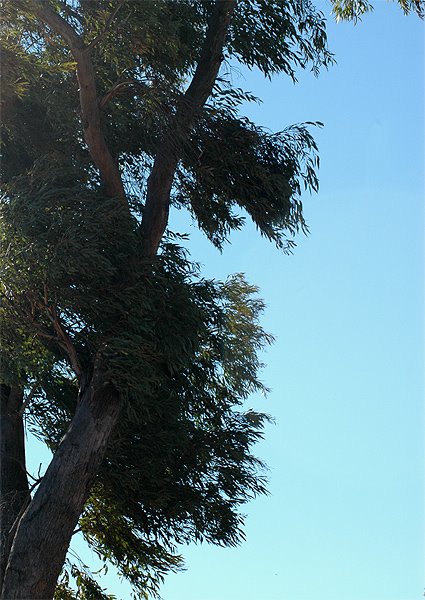
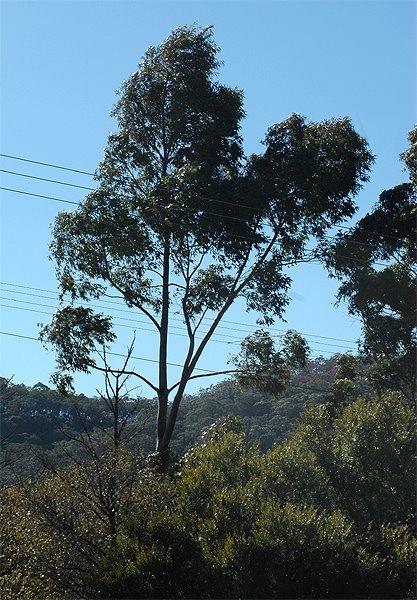
Astute observers will note that these are Eucalypt trees, not Robertson's rainforest trees. Rainforest trees are mostly denser in their foliage, and greener in their colour. The crown of Eucalypt trees tend to be open, allowing wind to pass through easily. The young tree in the top image shows that characteristic well. The second tree has been pruned, and these branches are re-growth.

Today's images come from Welby, the very early settlement near Mittagong. It happens to be where the Road Transport Authority has its Southern Highlands office, where I had to go today to register my car.

Monday, July 10, 2006

The Nature of a good view

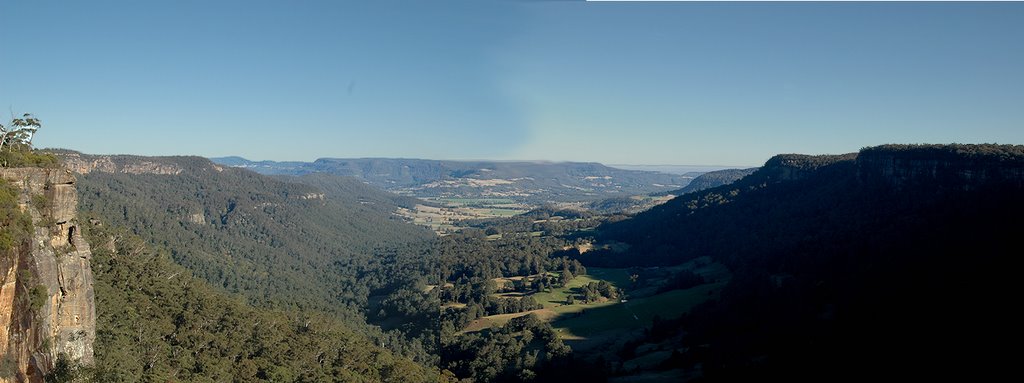
The best view of Kangaroo Valley which I know of (that is readily accessible) is from Hindmarsh Lookout, which is very close to Belmore Falls.

Click on the photo to enlarge this panoramic image.


Belmore Falls is the closest (to Robertson) of the local waterfalls. It is about 7 Km south of the village, down Belmore Falls Road.

This familiar view shows both the top waterfall (Belmore Falls proper) and a lower level waterfall.

The valley is filled with rainforest trees, and Lyrebirds were clearly heard calling from down in the valley bottom.

I am reliably informed by my bushwalking friends that there is a chain of six waterfalls at stages along the creek. Only the top two falls are visible from this lookout point.
*****

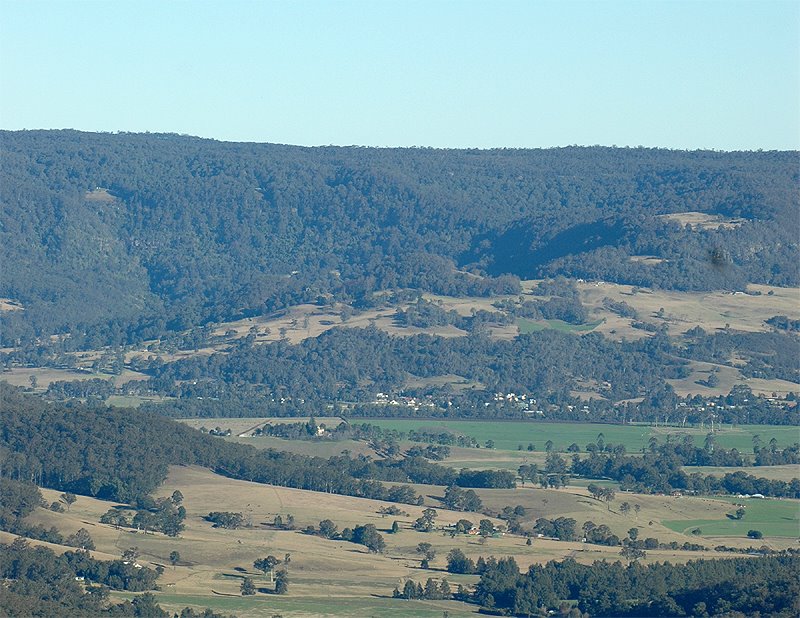
Near to the Belmore Falls lookout there is a totally different viewing point, right on the tip of the cliffline, where you look directly over Kangaroo Valley township. This is Hindmarsh Lookout.

From that lookout, one first notices the farmed areas in the "Upper Kangaroo Valley" (upper meaning "up-river" from Kangaroo Valley, in that sense). Then in the far end of the valley is the bright green area of the river flats, in Kangarooo Valley itself.

Just past the green paddocks in the bottom of the valley lies the village. The position of the village can be easily made out when the image is enlarged.

In fact the valley down which one is looking is the valley of Barrengarry Creek (which falls over the Belmore Falls). This valley has the same name as the Barrengarry Mountain, down which the main Kangaroo Valley Road passes, when one drives from Fitzroy Falls. However, the place name and this creek valley do not co-incide, as the mountain pass known as "Barrengarry Mountain" (on the main road into Kangaroo Valley) is no less than 2 valleys and 2 ridges away from here. Very confusing.

*****

I love this peaceful viewing point. On any day, in any weather, at any hour, there is always some point of interest which one can see, or appreciate, at this lookout point.

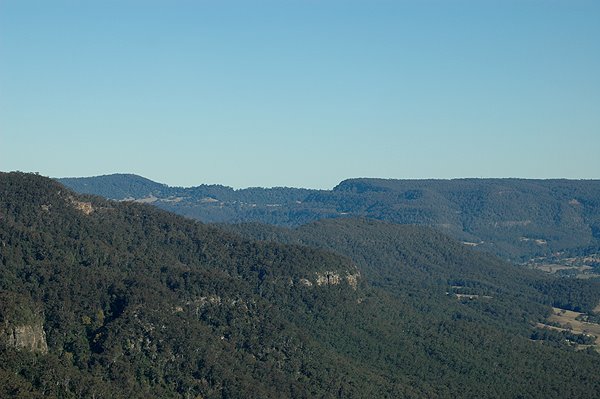
When I was looking at the view from here, I noticed that on the opposite ridge (to the east, i.e., front left, in this view) the cliffline is interrupted in one particular place.


It is places like that which the early European settlers in Kangaroo Valley would seek out, when looking for "passes" where they could develop tracks out of the Valley.

Some of these passes were vital to the economy of the early settlers, for these tracks were how they carried their produce to market, in Sydney, or to the early settlements on the highlands.
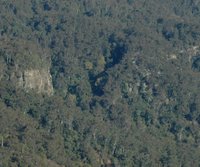
In the middle of this "close-up" image, there is an obvious creek line (with bright, light green coloured trees visible). This "close" may be enlarged by clicking on it.

Just to the right of that creek line, is what looks like a rock fall. That is where it might be possible to find a "pass" up to the plateau above. Almost certainly, this break in the cliff line would have been used as a "pass".

It is at that point where it might be possible to "pass" from the lower part of the valley to the top of the ridge, avoiding the sheer cliffs which otherwise form an impenetrable barrier along the hillsides.

As a matter of interest, the "different coloured trees" are, in fact, Red Cedar Trees, which are deciduous, and this images shows them changing colour, before losing their leaves. Red Cedar was a very important timber tree in the early days of European settlement in Kangaroo Valley.

Friday, July 07, 2006

The Nature of the "Wild Thing" in us all.

Last night was the biggest night in the history of the CTC.

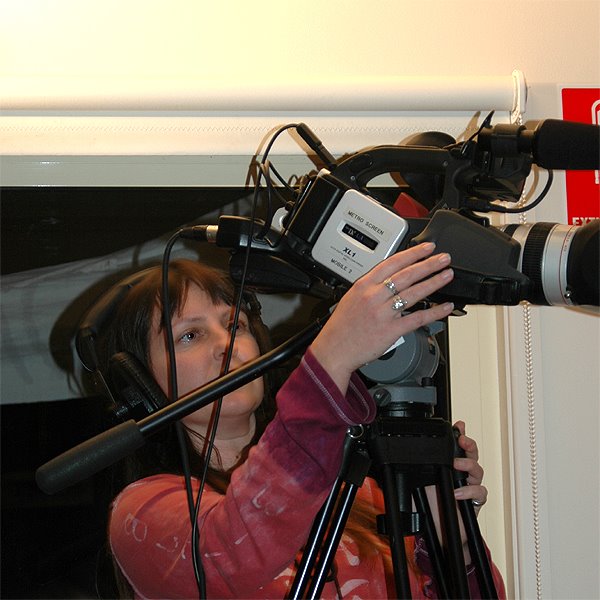
It was a Thursday Night Music Night, of course. But this one was special, as it was being filmed by the volunteers of the CTC, with assistance from a training crew from MetroScreen.

The word had gone out to help make it a big night - and it surely was, with approximately 60 people in attendance, at some stage or another.

Here is BJ, working behind the camera, early on in the night.


As a matter of record, we ordered no less than 15 Pizzas, from Thomas and Belinda at "Pizzas in the Mist". Normally we would order 4 or 5, or possibly 6 - but never 15 before!
The Pizzas were great, of course - as usual!

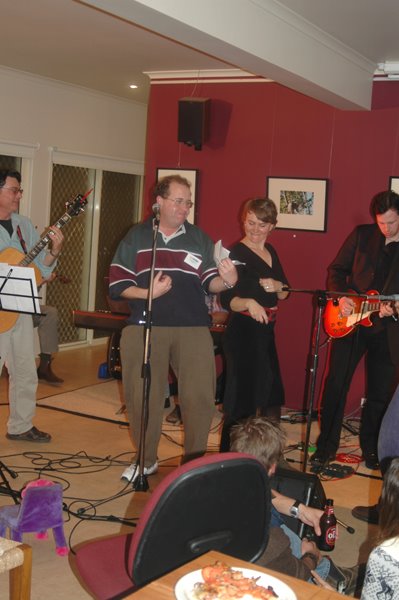
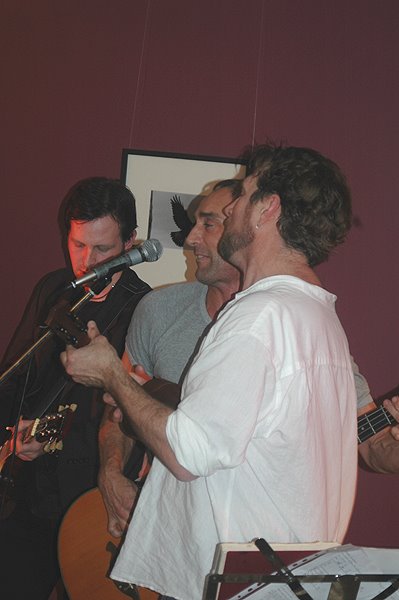
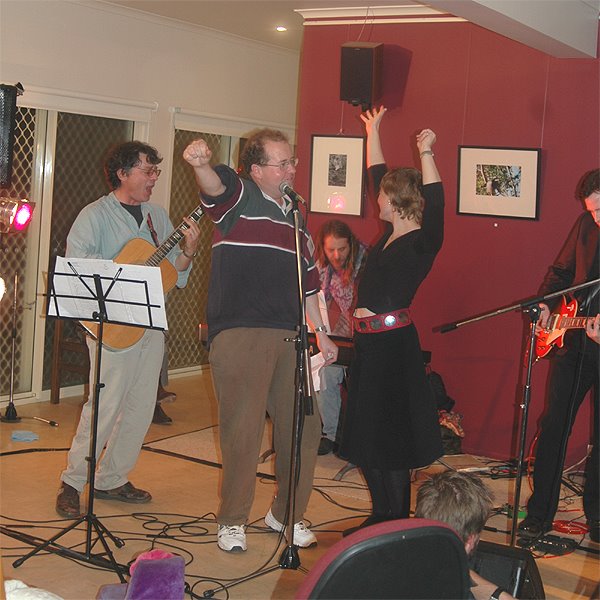
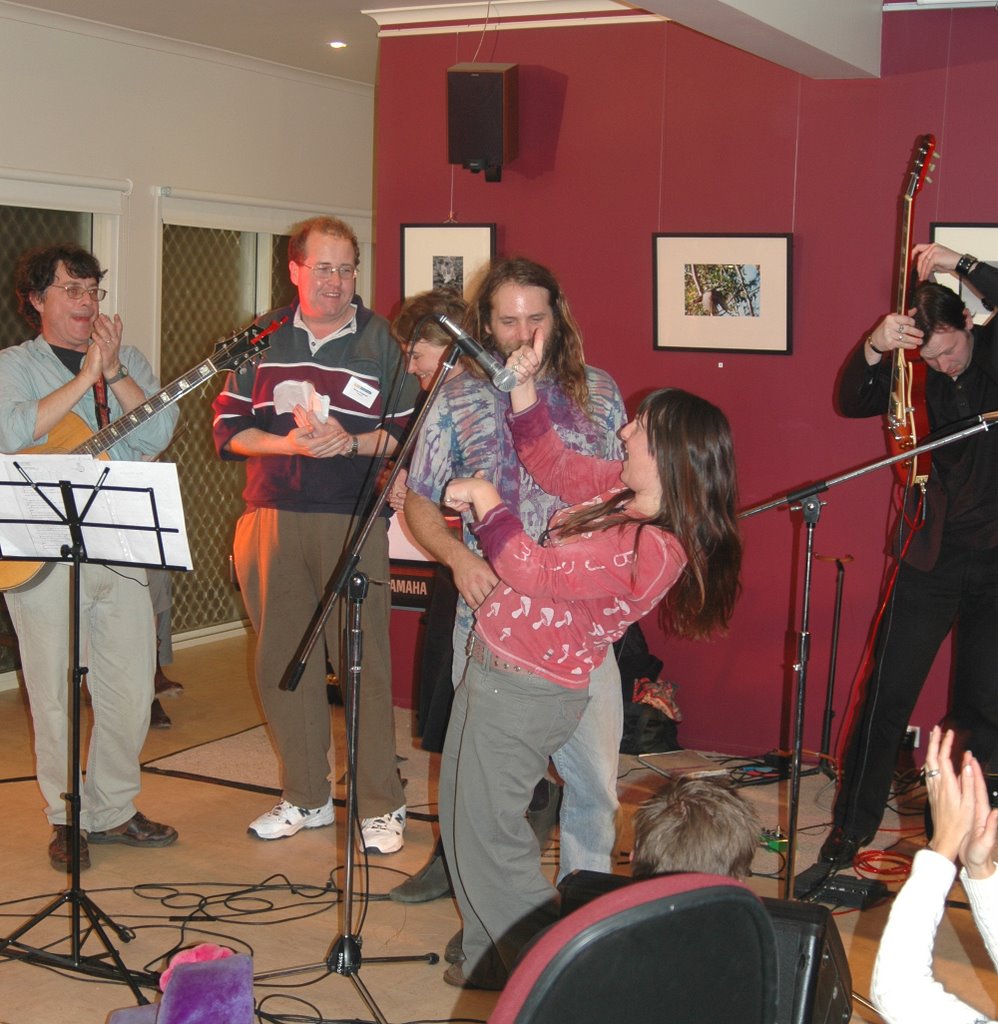
I will show a sequence of shots of Greg's party piece "Wild Thing", with Celeste accompanying Greg, when she was not "setting the scene" for the song, by dancing with and around him.

The musicians rocked it out hard, and the whole room was singing along. The drummers, in particular, were going crazy. A great finale to the evening's filming.


After such a high, of course, the place took a while to calm down, so we hung out and sang, and did some more drumming (on the table) - in my case.

A great night was had by all.


Wild thing
You make my heart sing

You make everything
Come on, wild thing


Wild thing, I think you move me
But I gotta know for sure

Come on and hold me tight
Oh you move me


Wild thing
You make my heart sing

You make everything
Come on, wild thing


Wild thing, I think I need you
But I gotta know for sure

Come on and squeeze me tight
Oh I need it


Wild thing
You make my heart sing

You make everything
Come on, wild thing


The Finale:


"Wild Thing" - Lyrics by Chip Taylor.
Apparently first recorded by The Troggs, but covered by just about everybody, notably Joan Jett!
*****

Thursday, July 06, 2006

Have Your Say: on the Kangaloon Aquifer.

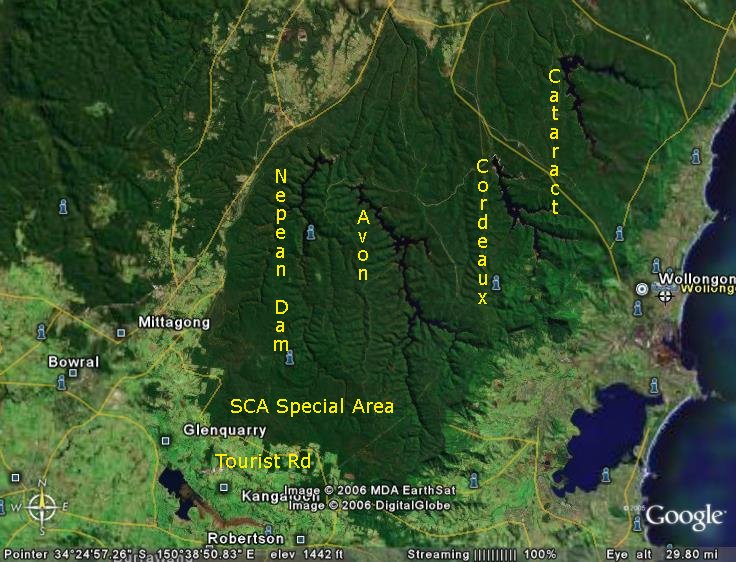
The local area is absolutely critical to water issues for Sydney.

The SCA's local "Special Area" (which starts on Tourist Road) protects the catchment of four dams on the Illawarra Plateau. Plus, our Caalang Creek is a major source for Warragamba Dam.

But it also is the location of the Kangaloon Aquifer.


Karen Guymer, is a local Robertson resident. She is one of a few people who I know who have been invited to join the Sydney Catchment Authority's "Upper Nepean Groundwater Community Reference Group".

Karen has created a blog specifically to advise people of developments in this very important process. It is called "Kangaloon Aquifer Issues", and may be found at this address: http://kangaloonaquifer.blogspot.com/

Karen has reported on the first meeting of the Committee. Click on that hotlink to see her report. She has published links on her site to reports and documents which the SCA has now released to the public.

Anyway, Karen has urged me to let everybody know that: you can HAVE YOUR SAY about the groundwater extraction proposal and these preliminary studies, up until 18 August 2006.

According to the SCA website, it will be possible to make comments on line. However, that system is not yet up and running. But you can download a "Have your Say" form. Alternatively, there is an email address provided on that site where comments may be sent to.

The Kangaloon Aquifer issue is important for the whole of the Southern Highlands.
Sydney's apparent inabilty to reduce its excessive use of water is the real problem.

"Rehabiltation - SCA style", along Tourist Road.


This is a pathetic effort by the SCA - indicative of their lack of understanding of the local environment, and the need to protect it.


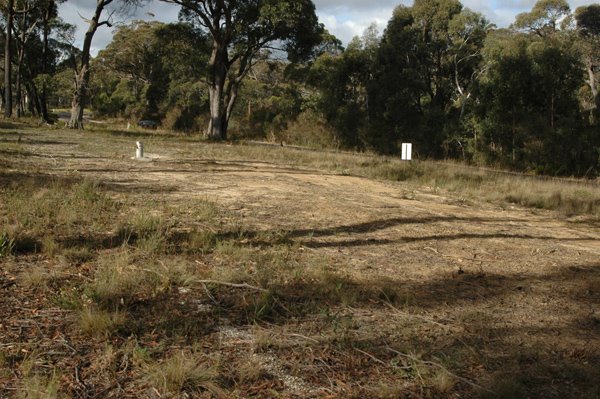
The site of one of the "Test Bores" along Tourist Road, from which the SCA were pumping groundwater around Christmas and January, this last summer.

This photo shows the sign (above) directly in front of this bare earth patch they have left behind themselves - supposedly a "rehabilitation area". The back of the sign is visible in the photo.

Tourist Road is also visible in the background.


Sucking dry the Kangaloon Aquifer will make "stuff all" difference to Sydney - the water they will take from here will only supply Sydney for two weeks. But the use of the local groundwater will make a difference to the local farmers, and to the local environment - and hence to the entire Southern Highlands.

The real issue is education of Sydneysiders on their water usage: unless they change their attitude to water resources, they are headed towards a disaster. But their profligacy will risk destroying the fragile environment of the Southern Highlands - something of which they are blissfully unaware.

GROUNDWATER: HAVE YOUR SAY

Wednesday, July 05, 2006

The Nature of the Illawarra Coastline


This is Wollongong and the Illawarra coastline, as seen from Mt Keira lookout, above the city. Click on that image to see my panorama of this spectacular coastline - perhaps the most dramatic in Australia.

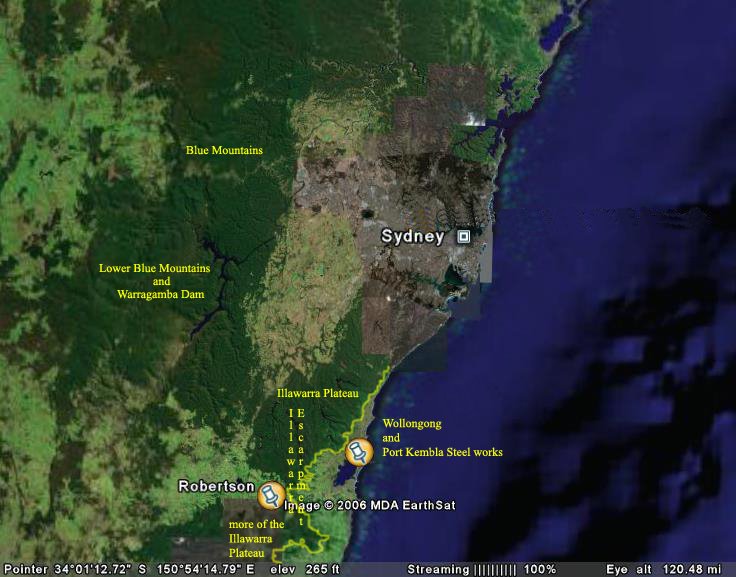
This fractured coastline is formed by the broken-off edge of the Illawarra Plateau, which is, in effect, a huge sandstone slab which stretches for 40 Kms behind the point of this viewing platform. Indeed it forms part of the huge sandstone formation which includes the Blue Mountains, and the area north of Sydney, nearly as far as Newcastle.

That is the geological formation known as the "Sydney Basin" (see the image of that region - at left - adapted from "Google Earth").

*****

Here is one of the most popular scenic views of the Illawarra coastline, taken from"Bald Hill", at Stanwell Tops. The view is looking south along the edge of the Illawarra Escarpment, towards Wollongong.

You can see the tiny settlements along the Illawarra Coast. Also visible is the new Sea Cliff Bridge which forms part of the Lawrence Hargrave Drive.


The dominant peaks seen in the image above all slope upwards on their eastern edge, reflecting the general tilt of the Illawarra Plateau.

Consequently, the water drainage of the entire Plateau behind Wollongong flows inland from immediately behind these coastal peaks, into the 4 main dams on the Illawarra Plateau (see image at left).

Those coastal clifftop peaks form the boundary of the Sydney Water Catchment.

*****

Stanwell Park is famous for its historical association with Lawrence Hargrave, who developed and tested his revolutionary Box Kite there. So, this place is important in the history of aviation, for Hargrave's design and plans proved to be of great inspiration to the Wright Brothers.

Hargrave's image and his Box Kite were included in the first Australian $20 note, when decimal currency was introduced to this country in 1966.

Tuesday, July 04, 2006

The Nature of birds in winter

This week has seen the continuation of winter (of course). A rich and varied pallette of weather, from cold and dry and sunny, to cold and wet and windy. Whatever the weather, the birds still need to keep on doing their thing.

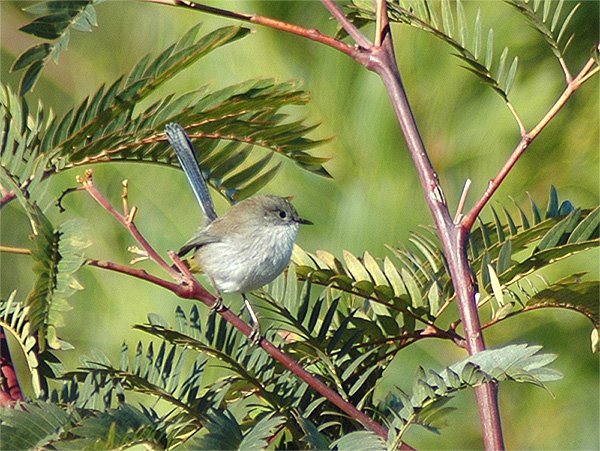
On a cold clear day, earlier this week, there was a Superb Fairy Wren, (Malurus cyaneus) male in "eclipse plumage", sitting outside my study window. These birds which look like the female, differ by having the distinctive blue tail feathers of the male, and dark eyes and beak, not the reddish brown colours of the female Wren.

The "Blue Wrens" (to use the more popular name) are often seen busily scurring amongst the shrubbery looking for insects. But this little fellow was happily sunning himself for a few moments, before ducking off in his usual busy manner.

Its call may be heard if you download the MP3 file from this site (item no: 36).


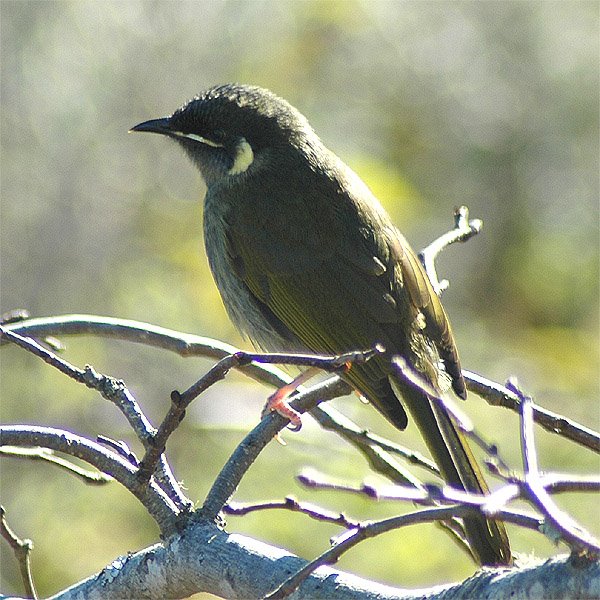
Another bird which is commonly seen around Robertson in winter (well, all year, actually) is the Lewin's Honeyeater (Meliphaga lewinii). For a true Honeyeater, (by which I mean not a Wattlebird), this is a large Honeyeater.

It has the distinctive yellow ear patch, a yellow "gape" (mouth marking) at the edge of the beak.

This bird is quite common in Robertson, but it likes to be in the heavy shrubbery. Consequently, it is more often heard than seen.

The ABC site linked here below will allow** you to download a file which will play the call of this bird for you. It has a rapid and repeated piping call.

** Note: the links to the bird calls on the ABC's site require you to have, or to install "Real Player" , which is available for downloading from that site. If you do not wish to proceed with that process, I can understand. It is not necessary to listen to these calls, if that process is troublesome for you.

For a Honeyeater, this bird is distinctive in that a large part of its diet is made up of fruit and berries. It is also fond of certain flowers in my garden, for their nectar.

However, this bird was hanging around in the Ink Bush (Phytolacca sp) for the purpose of gathering the ripe "inky" berries, which it loves.
*****
Other birds which are commonly seen and heard in winter, are the Bowerbirds, which come out into the paddocks to feed on insects (specifically in winter).
Crimson Rosellas are common, but often difficult to photograph, unless one has a bird feeding table.
Wonga Pigeons and the Eastern Whipbird (Psophodes olivaceus) (image visible at this site) are still around, but very hard to photograph. The Whipbird's distinctive call may also be downloaded from the ABC's site here.

Monday, July 03, 2006

The unreliable Nature of computers

I have been totally off the air for 36 hours. Don't you just hate computers?

Love them, for what they can do.

Hate them for what they will not do, when you want them to.

"No Speaks":
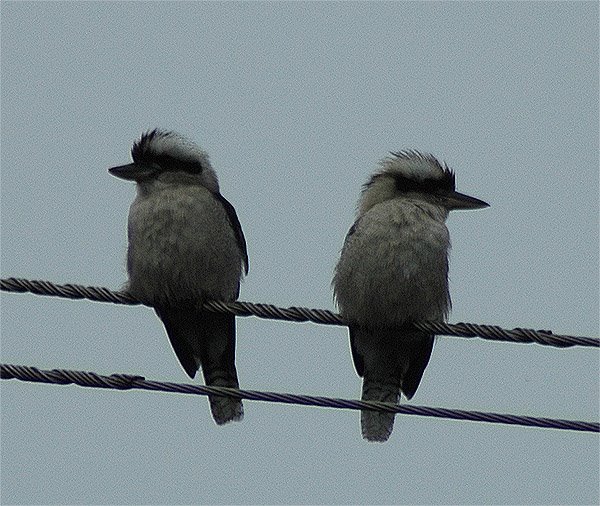
Kookaburras demonstrating my computer's behaviour


Ha, Ha, Ha on me!